
Two Yu-Gi-Oh! cards can share the same name, art and card number and still be different printings. One might be a 1st Edition from the original set. The other might be a 2020 reprint that sells for less. You don't need a price guide to sort them out, because the card itself tells you which one you have. There are four places to look: the card number, the edition, the copyright line and the foil.
I sell Yu-Gi-Oh! cards myself and list them with PowerList TCG. When I scan a batch, PowerList TCG suggests the exact printing for each card and I confirm it in review. Knowing these four spots is what makes that check fast, and it's the same check you'd make by hand before any listing.
The Four Things to Check
Go in this order. The first three are printed right on the card, so they're quick reads. The foil takes a little practice, which is why it comes last.
How to Read a Yu-Gi-Oh! Card Number
On most cards the card number is printed just below the art on the right side. Pendulum monsters move it to the bottom left of the text box, on the same line as ATK and DEF, because their Pendulum box fills the space under the art. Link monsters shift it a little to the left to make room for the Link Arrow.

| Part | Example: MAMA-EN079 | What It Tells You |
|---|---|---|
| Set code | MAMA | The product the card came from, here Magnificent Mavens |
| Language code | EN | The print language, here English |
| Card number | 079 | The card's position in that set |
Three things trip people up when they read one:
- Set codes are three or four characters. The earliest sets used three (LOB, MRD, IOC). Later sets use four (MAMA, SDAZ). Some mix letters and digits, like RA01 or MP23, so copy them exactly.
- Some numbers have a letter after the language code. Legendary Decks and token cards do this, like LDK2-ENJ06 and LDK2-ENK01. The letter groups the cards by deck and it's part of the number, so keep it when you record the card.
- The passcode is not the card number. The eight digits in the bottom-left corner identify the card itself. Every printing of that card carries the same passcode, so it can't tell you which printing you're holding.
Language Codes
| Code | Language or Region |
|---|---|
| EN | English, on every English set since Soul of the Duelist (2004). On the early sets it marks the Worldwide English or 25th Anniversary reprint |
| No code | The first North American English printings, 2002 to 2004 (LOB-001, IOC-046) |
| E | European English, early sets (LOB-E001) |
| FR, DE, IT, SP, PT | French, German, Italian, Spanish, Portuguese |
| AE | Asian English |
| JP, KR | Japanese, Korean |
Cards with no language letter are the original North American printings, from 2002 to 2004. Soul of the Duelist, in October 2004, was the first English set to print "EN".

EN on its own just means the card is an English printing. For most sets that's all it tells you, because those sets were only ever printed with EN. The early sets that came out before Soul of the Duelist are different. They were printed again later with EN added to the number, so the same card can turn up with and without it. The original North American card reads LOB-034, for example, and the later printings read LOB-EN034. On those early sets, an EN card with ©1996 is the Worldwide English printing and an EN card with ©2020 is the 25th Anniversary Edition (see The Copyright Line).

Asian English (AE) cards deserve a second look. The text is in English, but they're printed for Asia outside Japan and Korea and belong to the Asian (OCG) game, not the TCG, so they aren't legal at official TCG tournaments. The card backs changed over the years, which makes the AE in the card number the reliable check. An AE card is its own product, so never list it as the EN version.
1st Edition, Unlimited or Limited Edition
English Yu-Gi-Oh! cards come in three editions, and the edition is printed right on the card face. In PowerList TCG it's the card's Finish.
| Edition | What You See |
|---|---|
| 1st Edition | The words "1st Edition", with a small raised "st" |
| Limited Edition | The words "LIMITED EDITION" |
| Unlimited | No edition words at all |
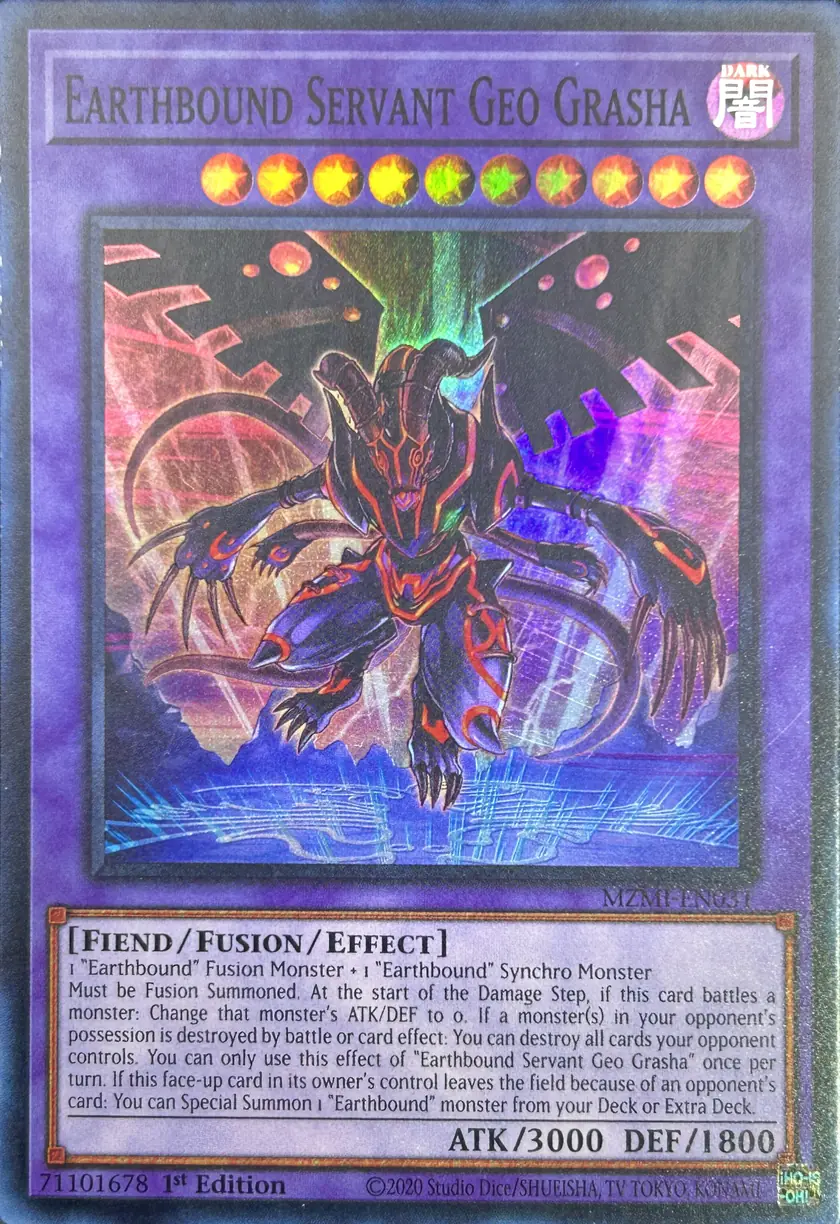
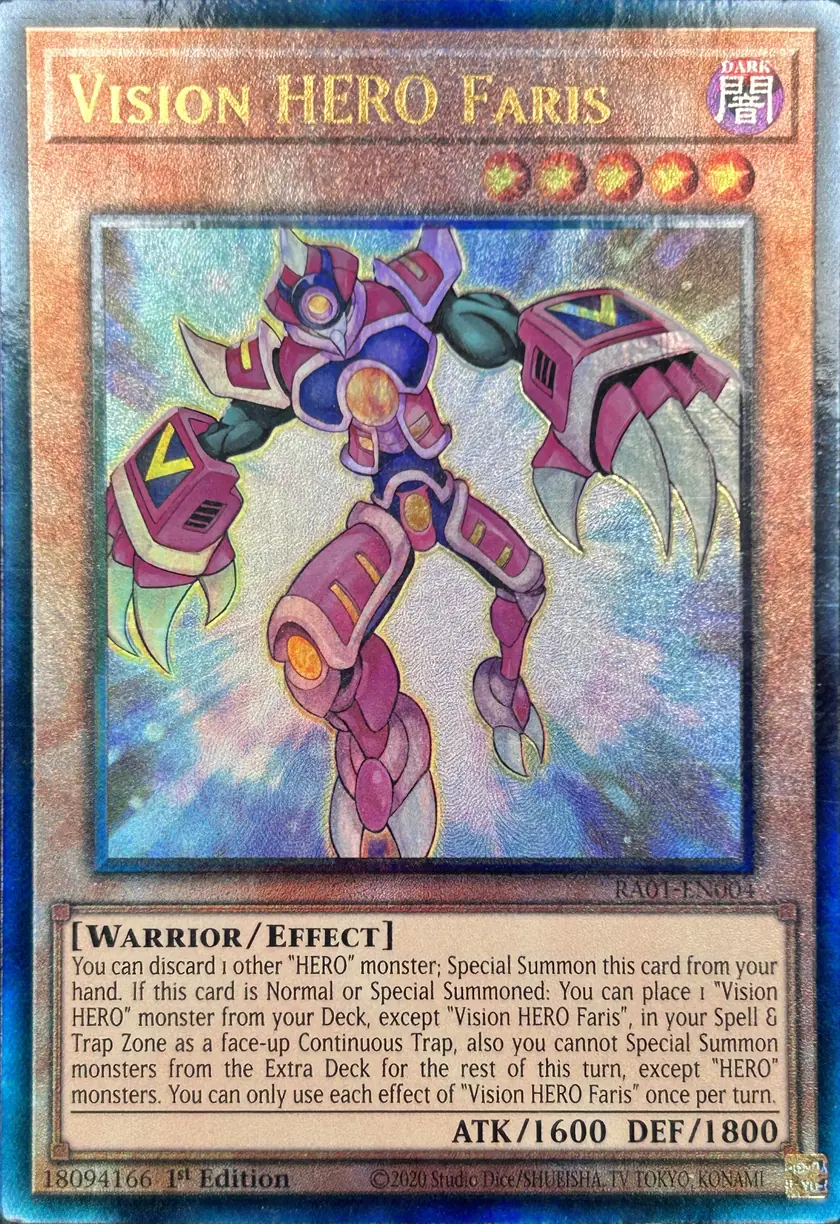
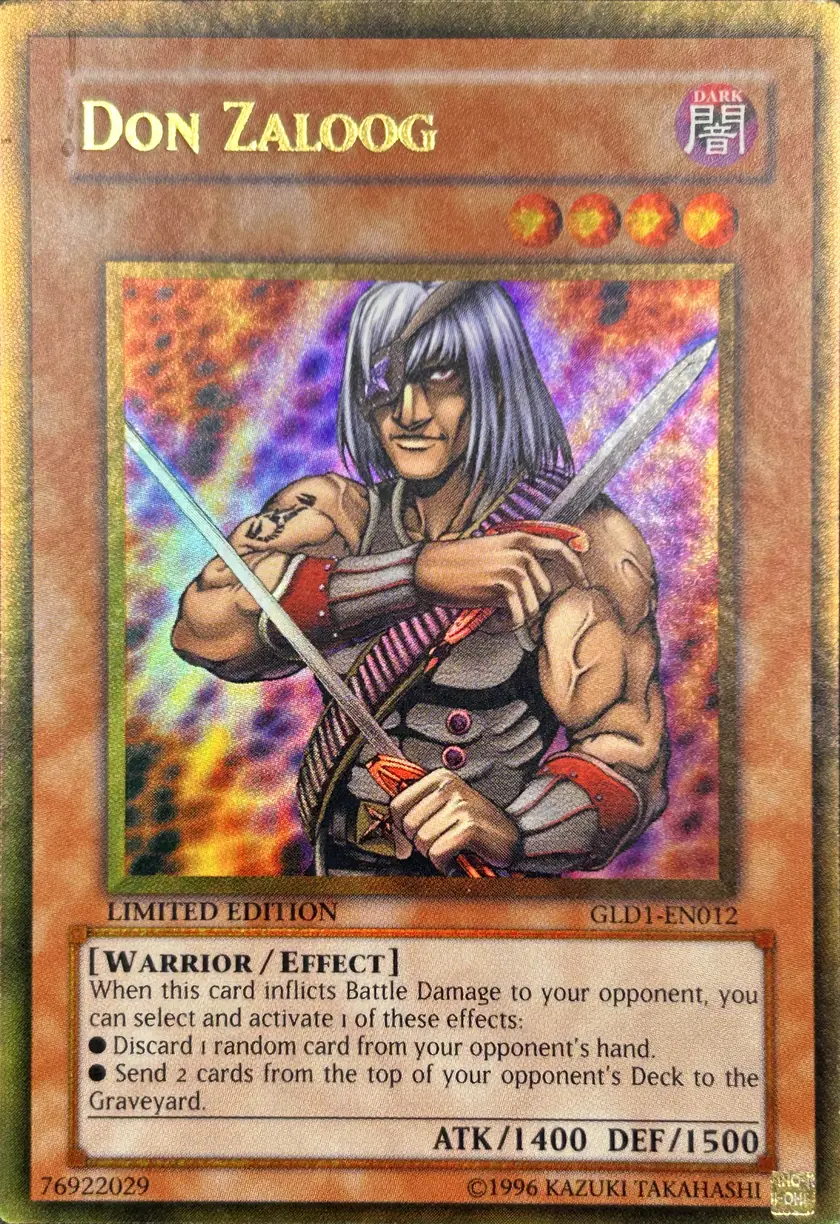
Where to look depends on when the card was printed. On older cards the edition words sit just below the left side of the art, on the same line as the card number. From Duelist Alliance (2014) on, most cards print them on the bottom line, just right of the eight-digit passcode.


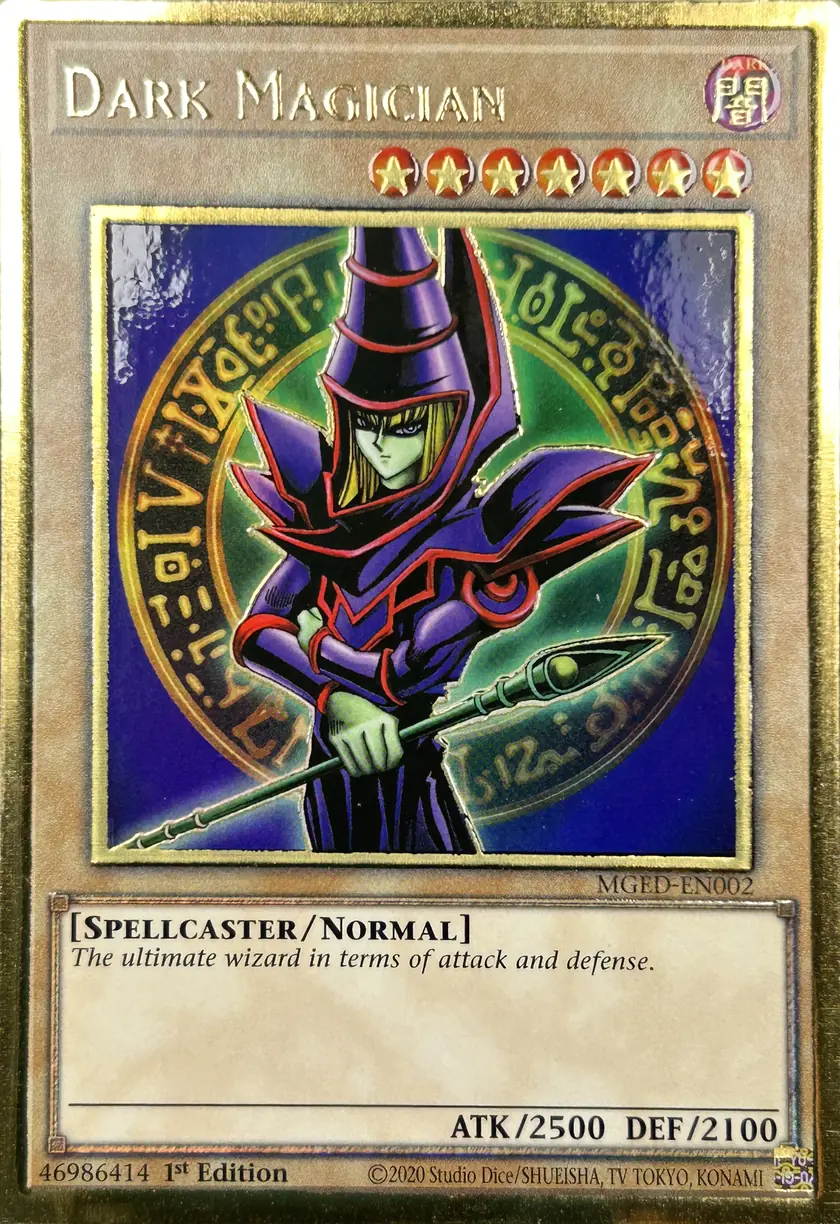
 Gold on 1st Edition
 Silver on Unlimited


 Gold on 1st Edition
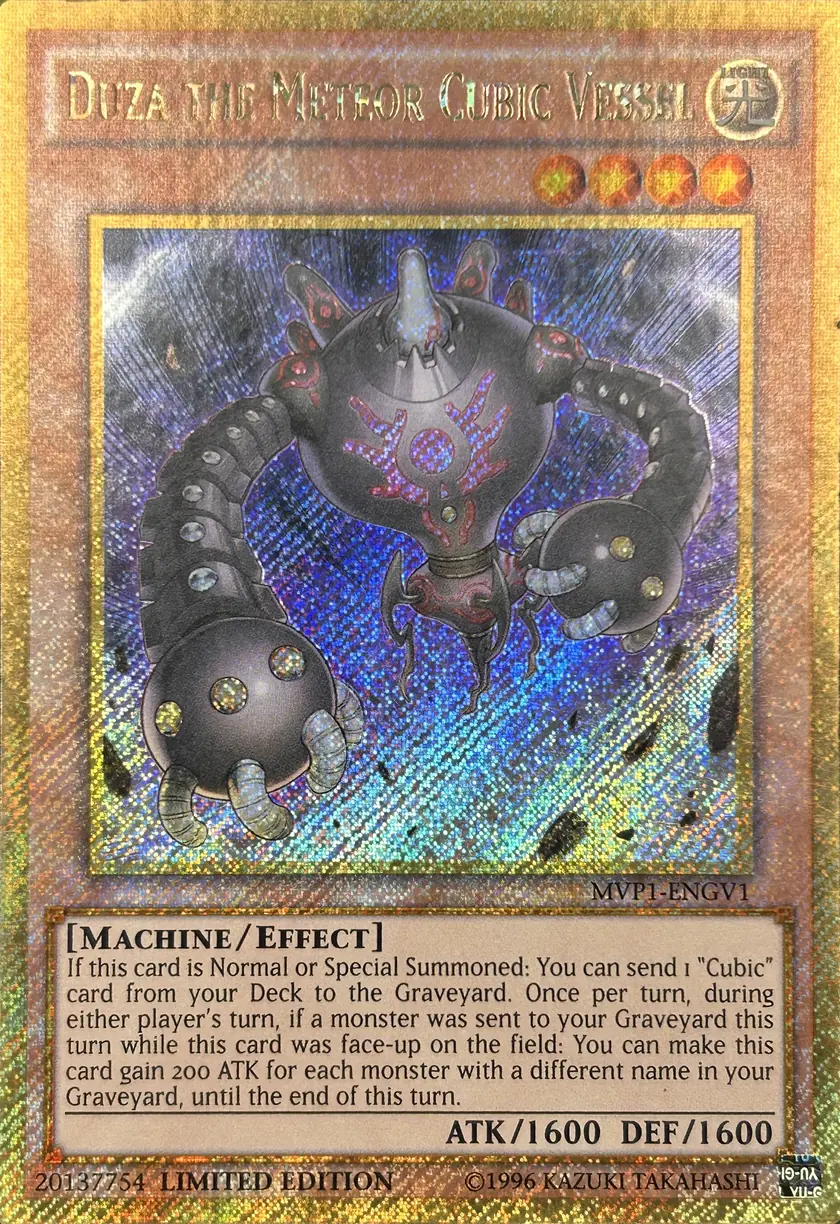
 Gold on Limited Edition
Unlimited can throw you at first because there's nothing to find. If neither "1st Edition" nor "LIMITED EDITION" shows up in either spot, the card is Unlimited. Plenty of cards are Unlimited, so an empty spot is a normal answer, not a sign you missed something.
Limited Edition comes from specific products, not booster packs: tin promos, Gold Series sets, box sets such as Noble Knights of the Round Table, Sneak Peek cards and magazine promos. A Limited Edition card from a tin is a different printing from the same card in a booster, even when the number matches.
The Eye of Anubis hologram is your backup check. It's the small square hologram in the bottom-right corner. It's gold on 1st Edition and Limited Edition cards and silver on Unlimited cards, with one exception: ticket cards are gold even in Unlimited sets. Read the printed words first and let the hologram back them up, since gold alone can't tell 1st Edition from Limited Edition.
The Copyright Line: Spotting a Reprint
This is the check most sellers miss. Starting in 2020, several older sets were reprinted with the same card numbers and the same art, and usually the same rarities. The easiest way to tell an original from one of these reprints is the copyright line along the bottom right of the card:
| Copyright Line | What It Tells You |
|---|---|
| ©1996 KAZUKI TAKAHASHI | Printed before 2020: the first printing or any reprint made before 2020 |
| ©2020 Studio Dice/SHUEISHA, TV TOKYO, KONAMI | Printed from 2020 on: new sets, and the reprints of older ones |
Every card printed since 2020 carries the ©2020 line, so the year matters most when one card number exists in both an original and a reprint. Read it together with the card number and the edition, because the year alone doesn't name the product. Marketplaces list these reprints separately, usually as "2020 Date Reprint" or "25th Anniversary Edition", and they sell at different prices. These are the sets reprinted this way:
2020 Date Reprint Sets
- King of Games: Yugi's Legendary Decks
- Legendary Decks II
- Legendary Dragon Decks
- Legendary Collection Kaiba
- Light of Destruction
- Retro Pack
- Retro Pack 2
- Structure Deck: Realm of Light
- Structure Deck: Saga of Blue-Eyes White Dragon
25th Anniversary Edition Sets
- Legend of Blue Eyes White Dragon
- Metal Raiders
- Spell Ruler
- Pharaoh's Servant
- Invasion of Chaos
- Dark Crisis


Invasion of Chaos in Three Printings
Invasion of Chaos shows how the card number and the copyright line work together. The same set exists in three English printings. The original North American printing has no language letter. The Worldwide English printing and the 25th Anniversary Edition share every IOC-EN card number, and the copyright year is how you tell those two apart.


How to Tell Yu-Gi-Oh! Rarities Apart
There's no rarity symbol printed on a Yu-Gi-Oh! card, so you tell the rarity by asking which parts of the card carry foil. Is it only the name? Does it cover the art? Do the level stars, the frame or the whole card shine? Tilt the card under a light while you look, because most foil only shows at an angle.
Foil patterns shift a little between sets and eras, so two Secret Rares from different years won't match exactly. Where the foil sits stays far more consistent, and that's the clue to trust. Keep in mind that not every odd-looking foil is its own rarity either. Misprints and printing flaws can make a card look different from a normal copy, so compare it with the examples here before you call it something rare.
Yu-Gi-Oh! Card Rarity Chart
These seven are the rarities you'll see most when you sort Yu-Gi-Oh! cards. The rarity chart below shows what each one looks like.
| Rarity | Card Name | Art | The Tell |
|---|---|---|---|
| Common | Plain ink | Plain | No foil anywhere on the card |
| Rare | Silver foil, bronze on newer cards | Plain | The name is the only foil |
| Super Rare | Plain ink | Smooth holofoil | Foil art with a plain name. Newer ones also foil the Attribute and level stars |
| Ultra Rare | Gold foil | Smooth holofoil | The same art as a Super Rare, and the gold name is the difference |
| Secret Rare | Rainbow foil | Diagonal crosshatch foil | Grainy art and sparkly level stars |
| Ultimate Rare | Gold, raised | Silvery and washed out, raised | Embossed, so you can feel the name, the art border and the stars |
| Ghost Rare | Silver on early cards, gold on later ones | Pale, almost colorless hologram | The art looks bleached |
Short Print describes how rarely a card was packed, not a foil. A Short Print looks exactly like a Common and nothing on the card marks it, so the only way to know is to check which cards were short printed in that set.
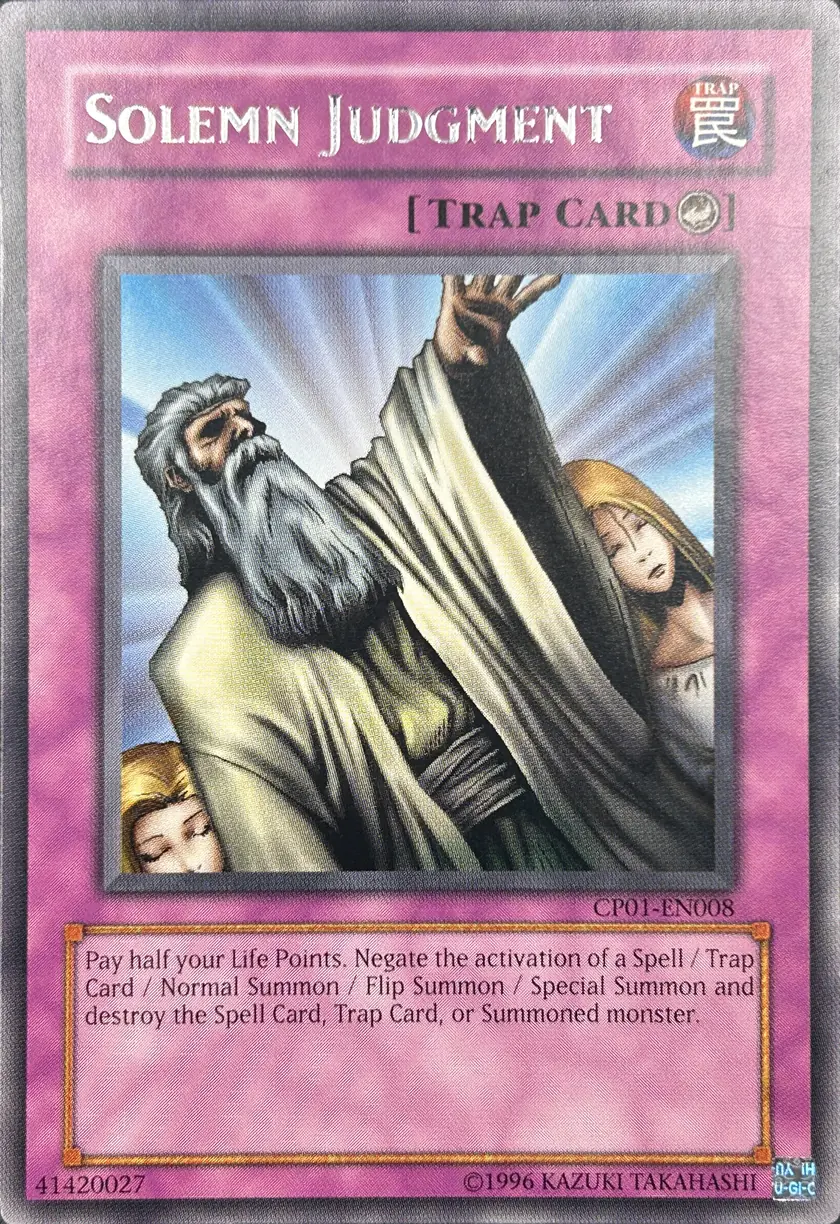
Every example below is one of my own cards, photographed under the same lamp so you can compare them side by side. Tap a card to see it bigger. On a foil, press Show Foil to see the same card with the lamp moved to where the foil lights up.
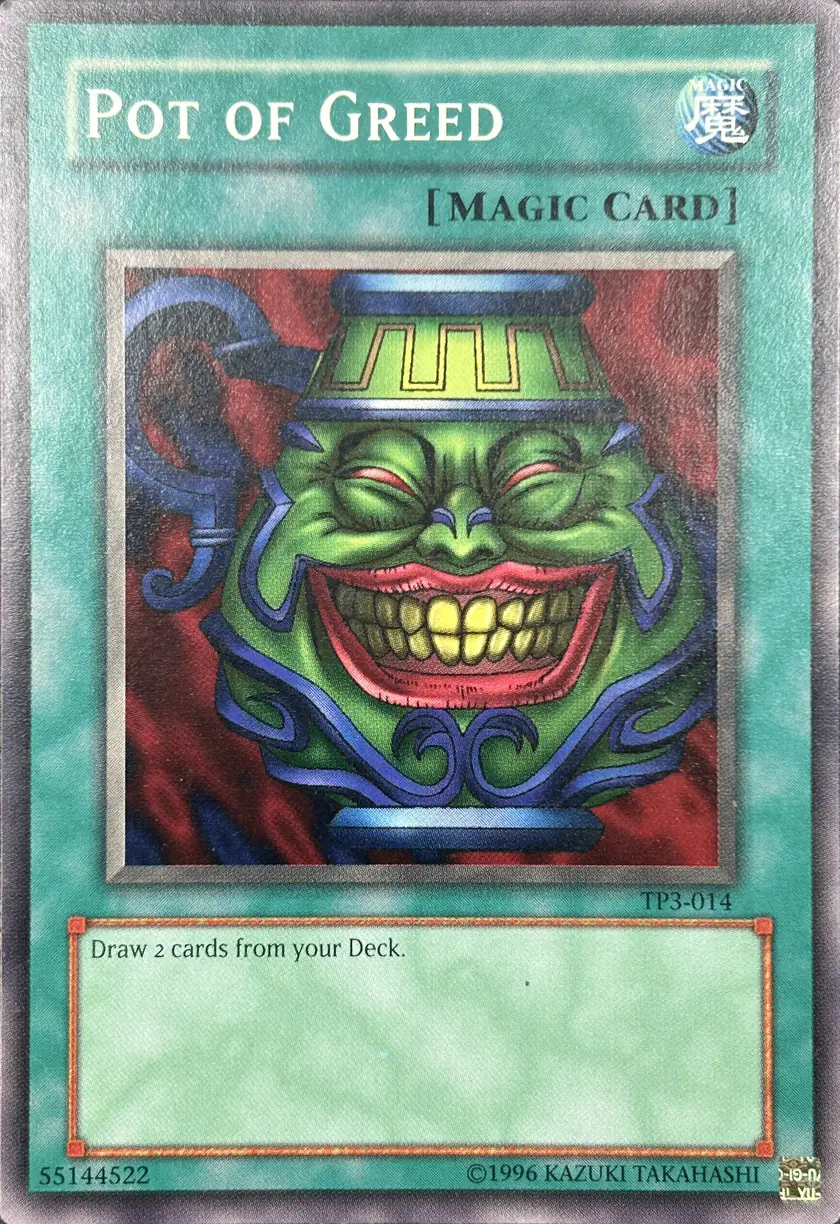
Common
No foil anywhere on the card.
Rare
The silver name is the only foil.
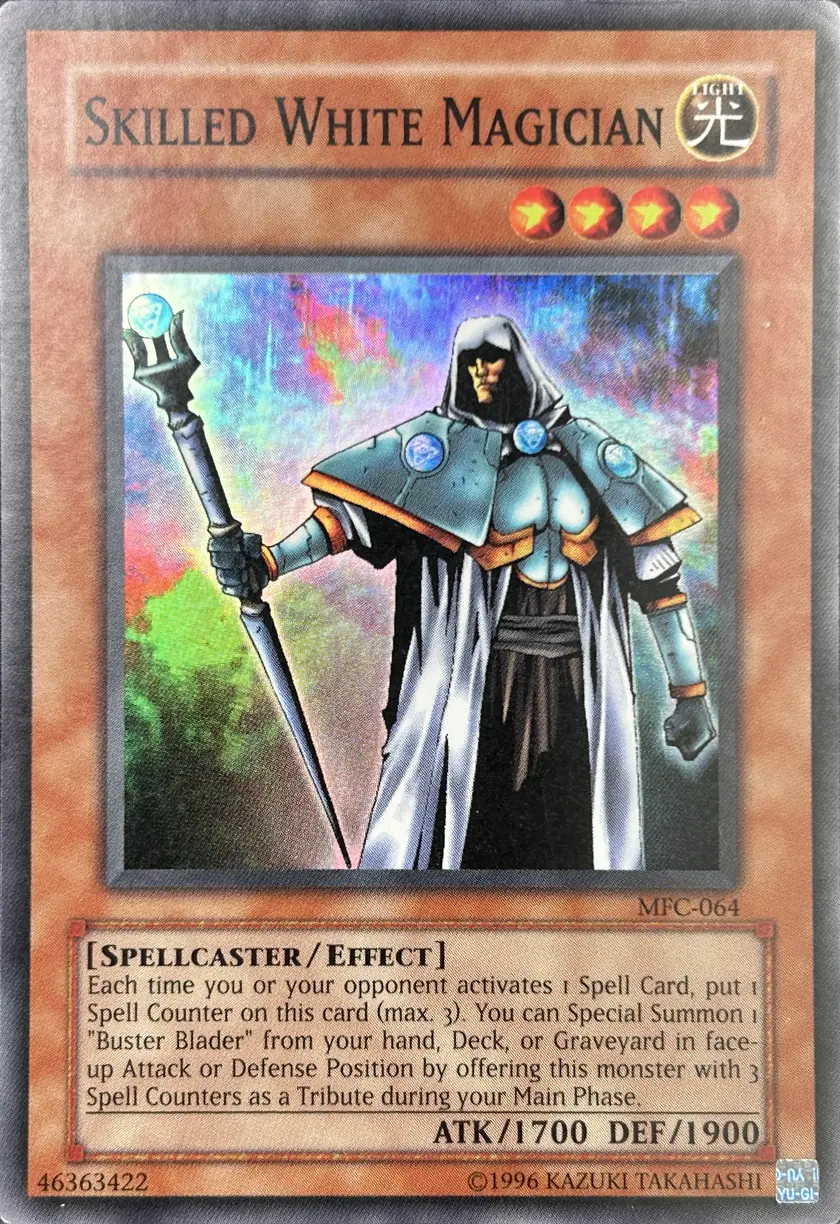
Super Rare
Foil art with a plain name.
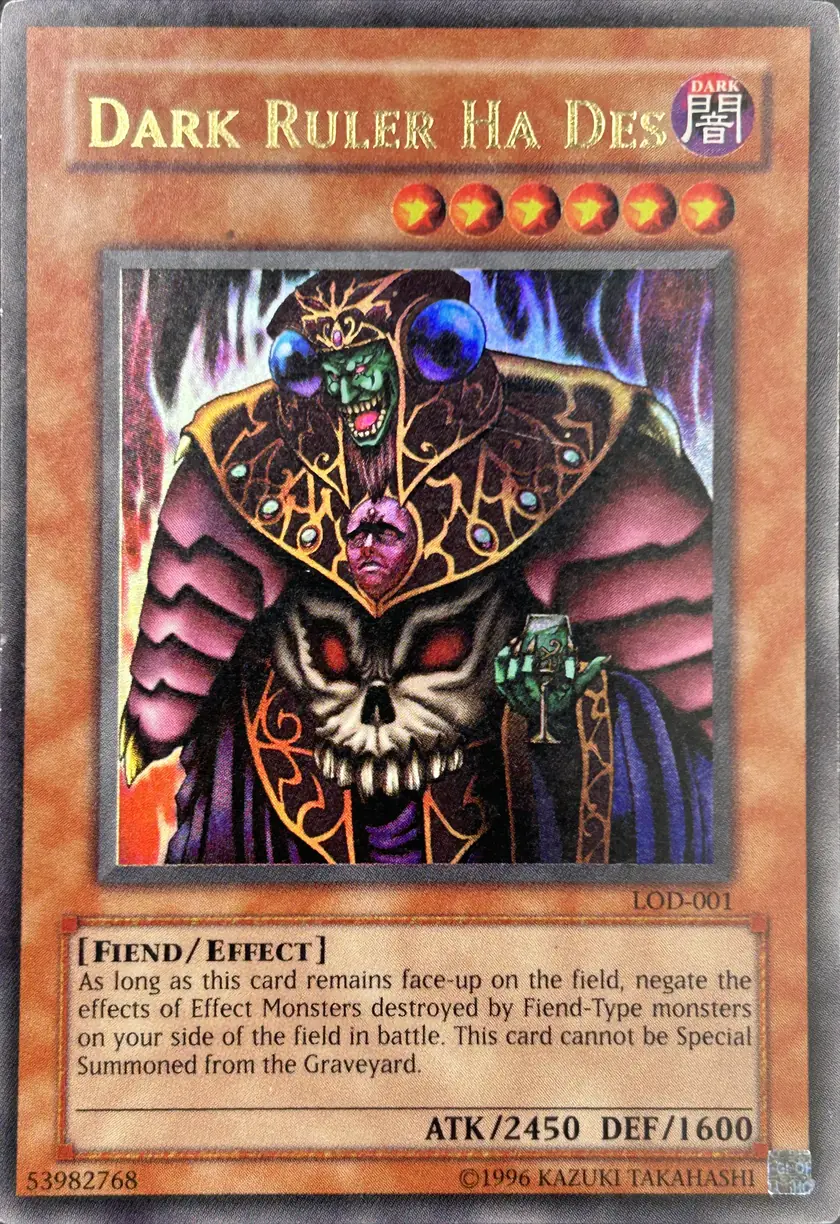
Ultra Rare
Foil art with a gold name.

Secret Rare
Grainy crosshatched art, sparkly stars and a rainbow name.
Move over the card to watch the foil shift.
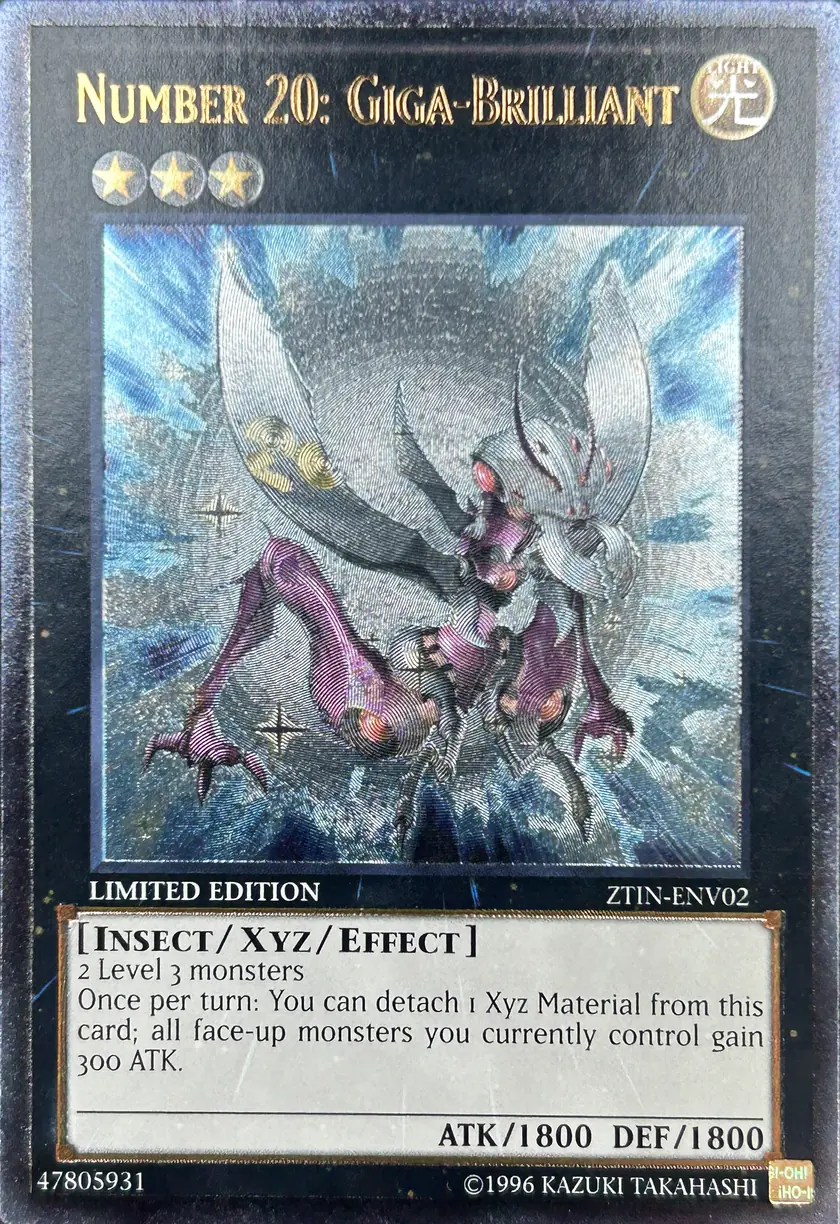
Ultimate Rare
Embossed, so you can feel the name, the art border and the stars.
Ghost Rare
Pale, almost colorless art that looks bleached.
 Super Rare name
 Ultra Rare name
 Secret Rare name
 Super Rare art
 Ultra Rare art
 Secret Rare art
Other Yu-Gi-Oh! Rarities
Past those seven, here's every other Yu-Gi-Oh! rarity in the PowerList TCG catalog, grouped by family. Most of them come from one kind of product, so the set code narrows it down quickly. The Yu-Gi-Oh! Set List shows which rarities each set was printed in.
Secret Rare Variants
Each of these starts as Secret Rare foil and changes where the foil goes or which way it runs.
| Rarity | Found In | The Tell |
|---|---|---|
| Prismatic Secret Rare | Special products, such as tins | Secret foil on the art runs in straight rows and columns. Newer cards have a name speckled in several colors, and older promos keep a plain name |
| Quarter Century Secret Rare | 25th anniversary products and later sets | Secret foil over the whole card, frame and border included, a champagne-gold name and a faint "25th Quarter Century" watermark in the text box |
| Platinum Secret Rare | The 2014 and 2015 Mega-Tins first, then Rarity Collection sets, Quarter Century Bonanza and Quarter Century Stampede | Cool silver-white foil in the Secret Rare texture and a bright silver-white name |
| Starlight Rare | Core booster sets since 2019 and some special products | Rainbow foil in horizontal lines over almost the whole card, with only the text box plain |
| Collector's Rare | 60-card sets from Toon Chaos (2020) on, such as Amazing Defenders, and the Maze sets | Rainbow parallel foil on the Attribute, stars, art and borders, a speckled frame and a silver name |
| Secret Pharaoh's Rare | King's Court and Magnificent Mavens | Secret Rare foil with small Egyptian hieroglyphs worked into it, seen when you tilt it |
| Emblazoned Secret Rare | Limited Pack World Championship 2025 | A Secret Rare with the World Championship 2025 logo in the middle of the text box |
| 10000 Secret Rare | Battles of Legend: Armageddon | Secret Rare foil with a 10000 watermark, printed only on Ten Thousand Dragon (BLAR-EN10K) |
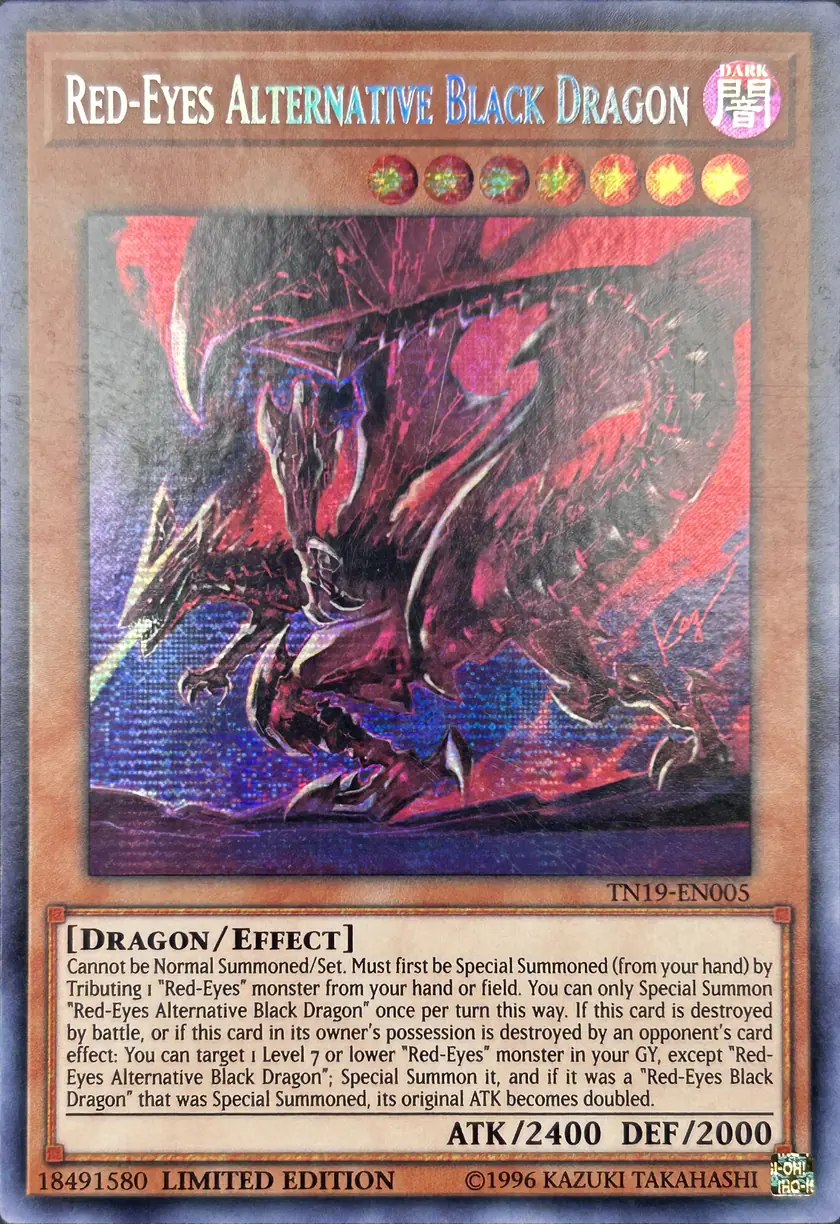
Prismatic Secret Rare
The foil on the art runs in straight rows and columns instead of diagonals, and the name is speckled in several colors.
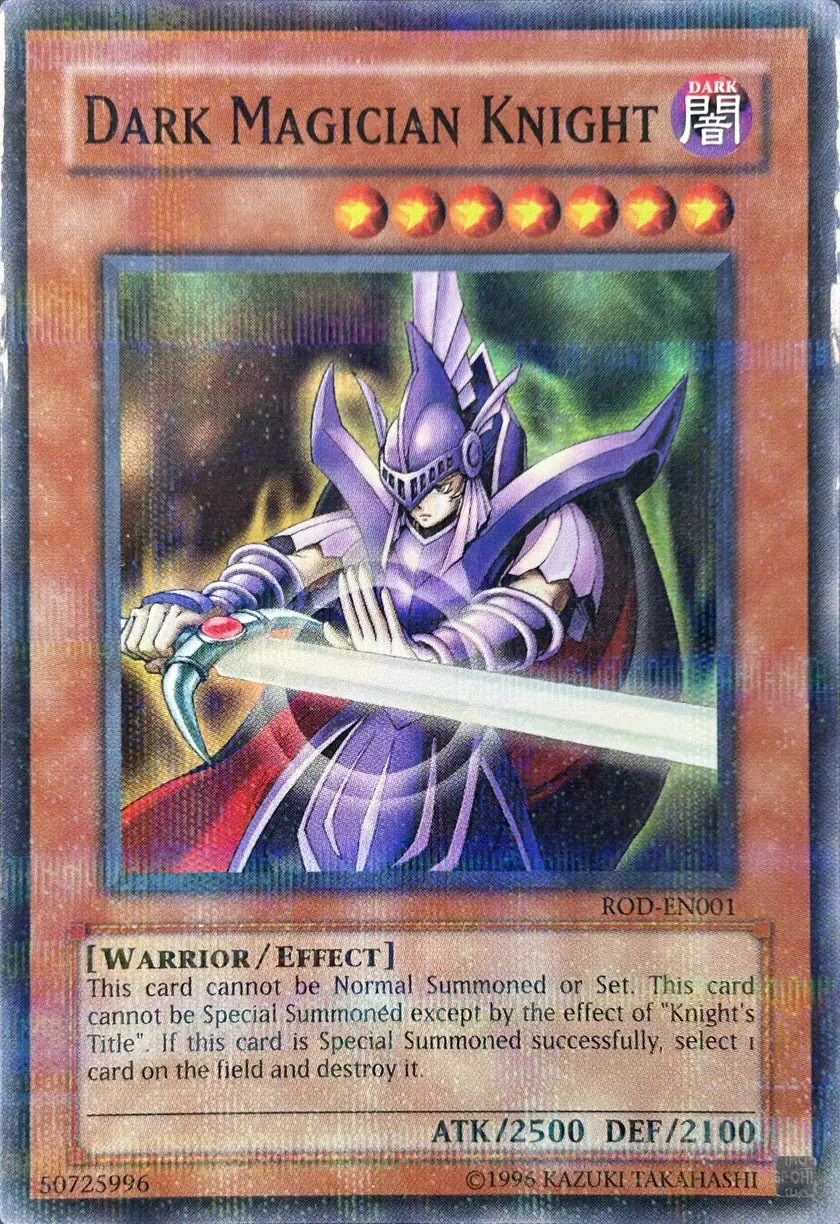
Prismatic Secret Rare, Older Promo
Older Prismatic Secret promos like Dark Magician Knight, ROD-EN001, keep a plain name. The straight rows and columns in the foil are the tell.
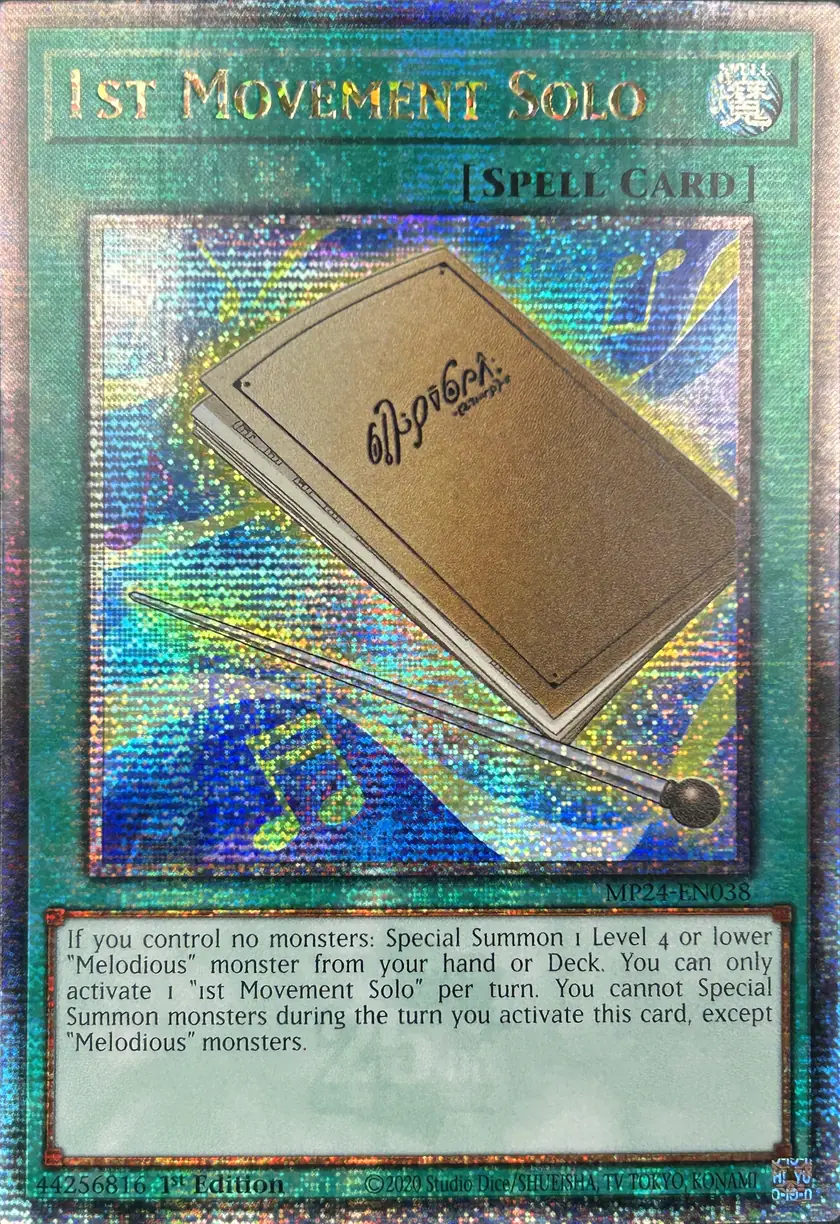
Quarter Century Secret Rare
Secret Rare foil covers the whole card, frame and border included. The name is a speckled champagne gold, and a faint "25th Quarter Century" watermark sits in the text box.
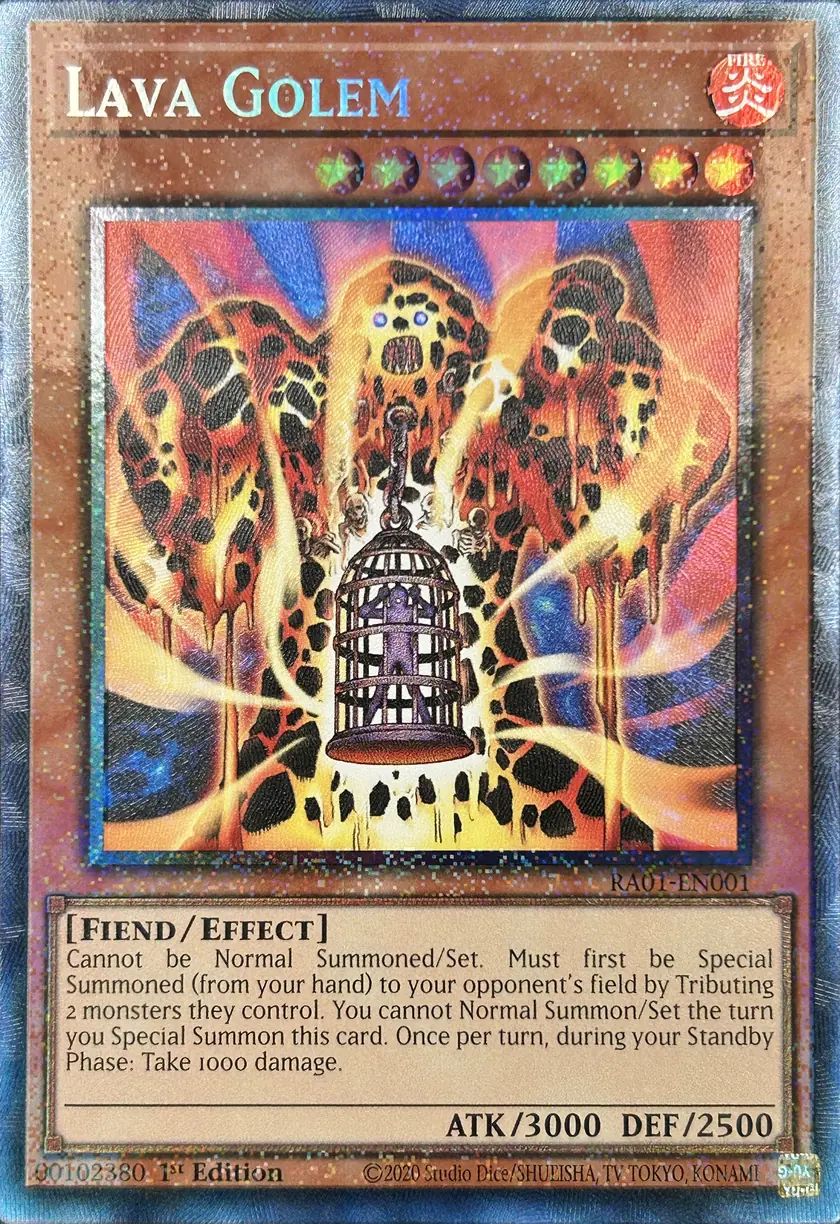
Platinum Secret Rare
First printed in the 2014 and 2015 Mega-Tins. The foil is a cool silver-white in the Secret Rare texture and the name a bright silver-white. How much of the card it covers changes by set: on the first Rarity Collection only the name, Attribute and borders.
Starlight Rare
Intense rainbow foil runs in horizontal lines over almost the whole card. Only the text box is left plain.
Collector's Rare
Rainbow parallel foil covers the Attribute, stars, art and borders. The frame has a speckled coating and the name is silver.
Ultra and Ultimate Rare Variants
These build on an Ultra Rare or an Ultimate Rare. The two Prismatic rarities only come from the Rarity Collection sets.
| Rarity | Found In | The Tell |
|---|---|---|
| Ultra Pharaoh's Rare | King's Court and Magnificent Mavens | An Ultra Rare with small Egyptian hieroglyphs in the foil, seen when you tilt it |
| Emblazoned Ultra Rare | Limited Pack World Championship 2025 | An Ultra Rare with the World Championship 2025 logo in the middle of the text box |
| Prismatic Ultimate Rare | Rarity Collection sets | Embossed like an Ultimate Rare, but the art keeps its full color and the name is gold |
| Prismatic Collector's Rare | Rarity Collection sets | The frame sparkles and the name is silver |
Prismatic Ultimate Rare
It is embossed like an Ultimate Rare, but the art keeps its full color and the name is gold.
Prismatic Collector's Rare
The frame sparkles and the name is silver.
Gold, Platinum and Numbered Rarities
These only come out of certain products, so the set code is a strong hint before you even tilt the card.
| Rarity | Found In | The Tell |
|---|---|---|
| Gold Rare | Gold Series sets | A gold name, gold borders and a gold rim around the art. From Gold Series 3 on, the level stars are gold too |
| Ghost/Gold Rare | Gold Series: Haunted Mine | Ghost Rare art inside a Gold Series border |
| Premium Gold Rare | Maximum Gold sets | A thick, embossed gold band around the art and borders |
| Gold Secret Rare | Gold-themed sets, such as Premium Gold | Secret Rare art inside a glittering gold border |
| Platinum Rare | Noble Knights of the Round Table Box Set | Platinum foil over everything but the text box and the Attribute icon, so the frame looks dark gunmetal, with a silver-white name |
| Grand Master Rare | Magnificent Monsters (2026) | A hieroglyphic border and a serial number. Each of its 18 cards is numbered 1 to 100 twice: once for the Americas and once, ending in E, for Europe |
Gold Rare
Found in Gold Series sets, with a gold name, gold borders and a gold rim around the art. From Gold Series 3 on, the level stars are gold as well.
Ghost/Gold Rare
Ghost Rare art sits inside a Gold Series border.
Premium Gold Rare
A thick, embossed gold band runs around the art and borders.
Gold Secret Rare
Secret Rare art sits inside a glittering gold border.
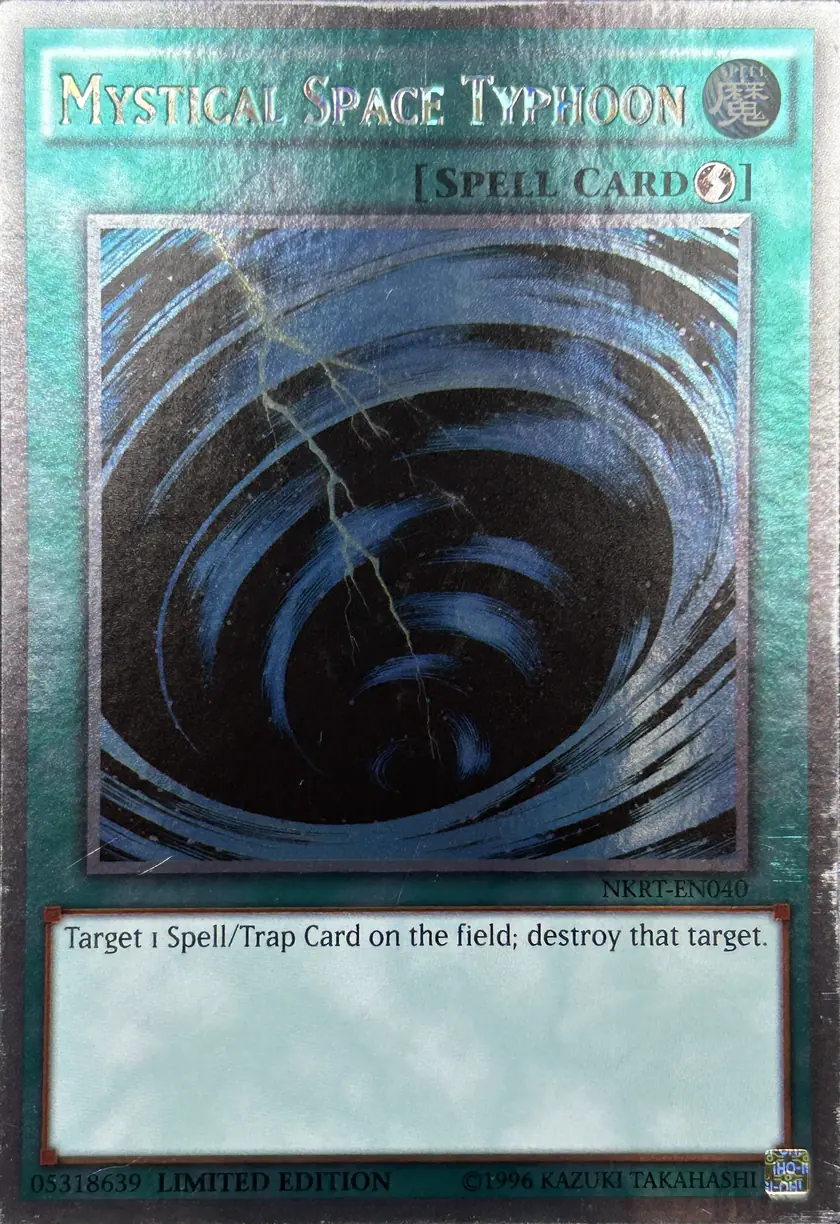
Platinum Rare
It only comes in the Noble Knights of the Round Table Box Set, where every card is this rarity. Platinum foil covers everything but the text box and the Attribute or Spell icon, so the colored frame looks dark gunmetal and a Spell looks slate instead of green. The name is silver-white.
Battle Pack Foils
Full-card foils from the Battle Packs and Star Packs. The pattern covers the whole card face.
| Rarity | Found In | The Tell |
|---|---|---|
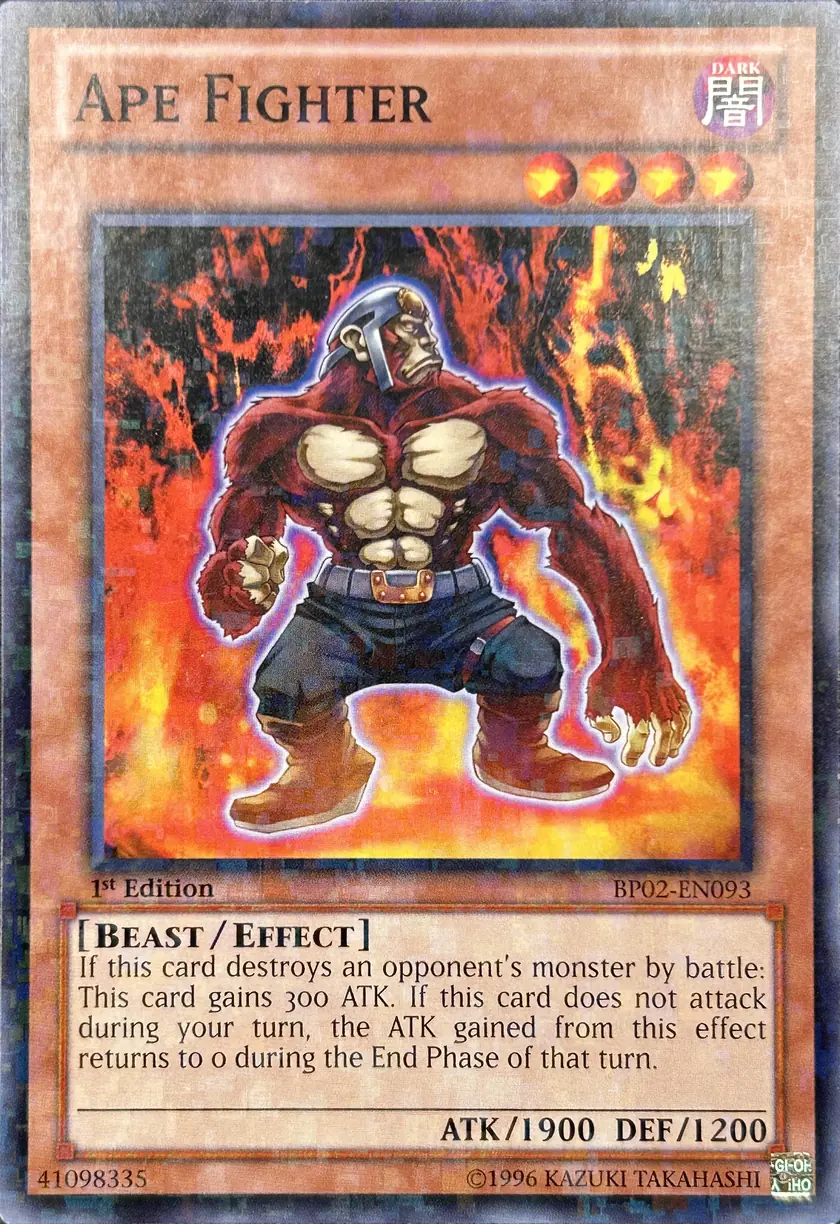
| Starfoil Rare | Battle Pack: Epic Dawn and Star Packs | Small stars cover the whole card face |
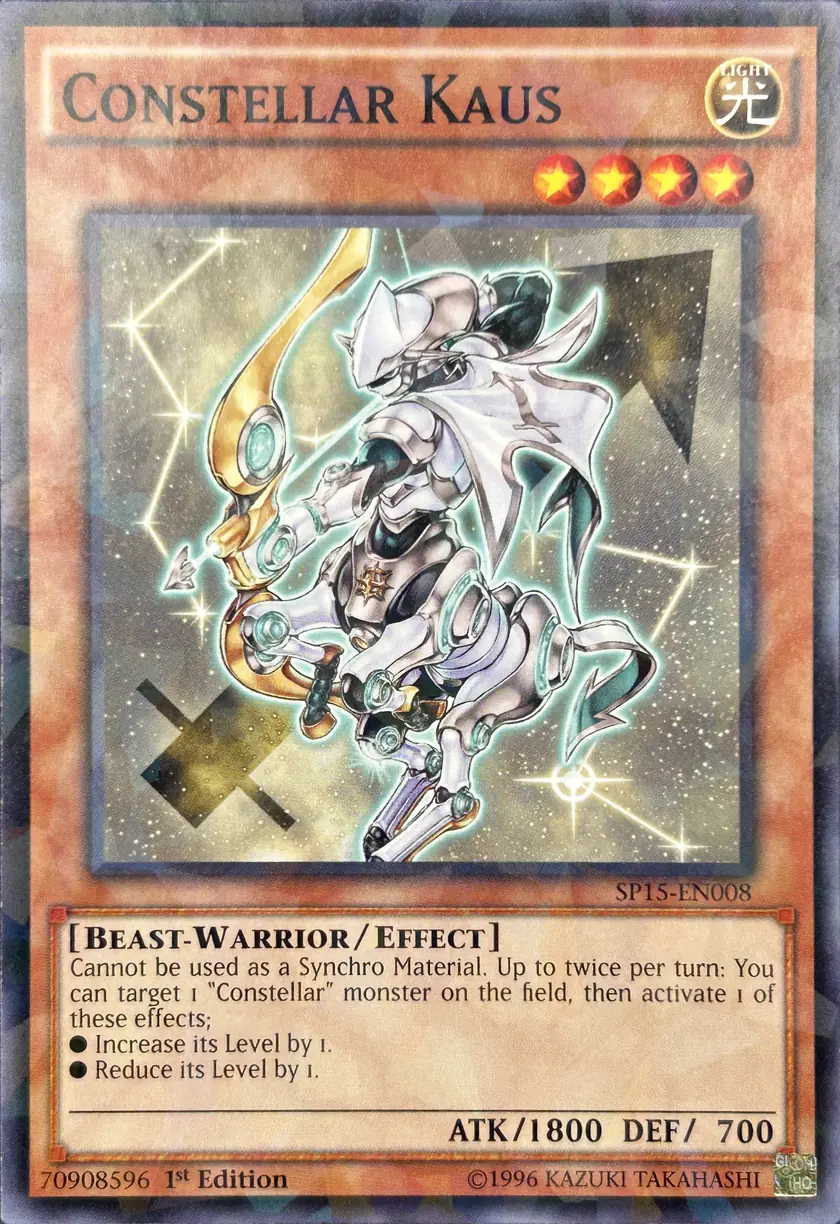
| Mosaic Rare | Battle Pack 2: War of the Giants | Small squares cover the whole card face |
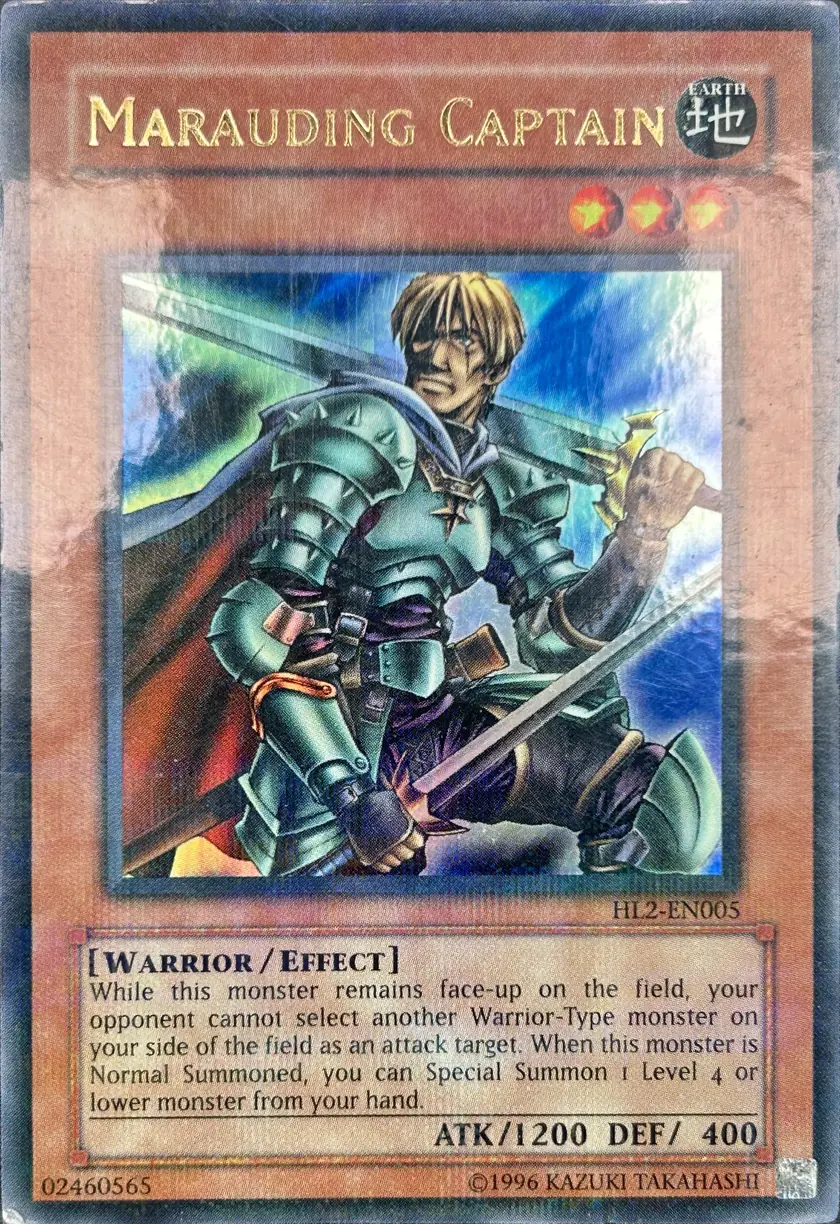
| Shatterfoil Rare | Battle Pack 3: Monster League and a few later packs | A cracked-glass pattern covers the whole card face |
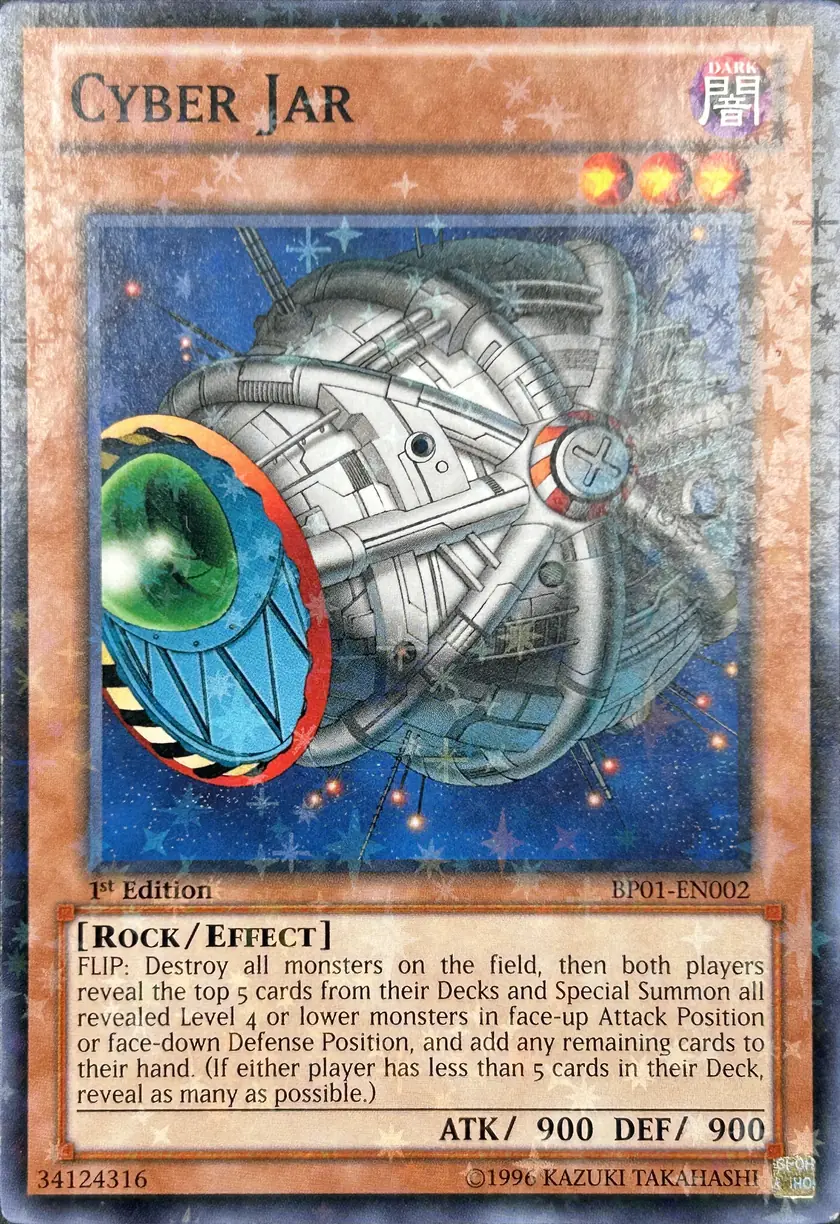
Starfoil Rare
Small stars cover the whole card face.
Mosaic Rare
Small squares cover the whole card face.
Shatterfoil Rare
A cracked-glass pattern covers the whole card face.
Parallel and Duel Terminal Rarities
A parallel foil sits on top of a card's normal rarity, so spot the coating first and then read the rarity underneath.
| Rarity | Found In | The Tell |
|---|---|---|
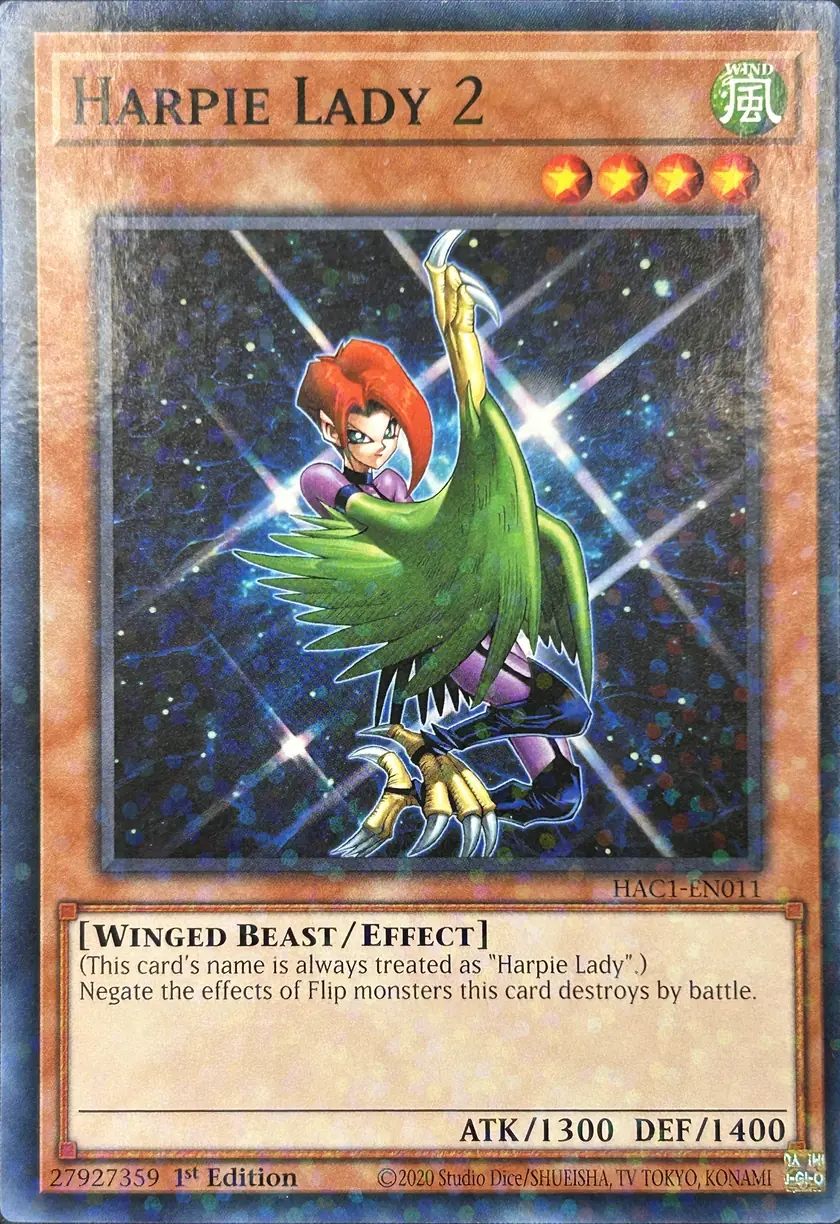
| Parallel Rare | Promos and special products | A holographic coating over the whole card surface, on top of its normal look |
| Duel Terminal Normal Parallel Rare | Duel Terminal sets | A Common under fine dotted foil that covers the whole card, with "DUEL TERMINAL" under the left side of the art |
| Duel Terminal Rare Parallel Rare | Duel Terminal sets | The same dotted foil over a Rare, so the name is silver |
| Duel Terminal Super Parallel Rare | Duel Terminal sets | The same dotted foil over a Super Rare: foil art and a plain name |
| Duel Terminal Ultra Parallel Rare | Duel Terminal sets | The same dotted foil over an Ultra Rare: foil art and a gold name |
| Duel Terminal Technology Common | Hidden Arsenal: Chapter 1 | A Common reprinted with the Duel Terminal style foil over the whole card, one per pack. The same cards also come as plain Commons, so check for the foil |
| Duel Terminal Technology Ultra Rare | Hidden Arsenal: Chapter 1 | An Ultra Rare reprinted with the Duel Terminal style foil over the whole card |
Parallel Rare
A holographic coating covers the whole card surface on top of its normal look. It turns up on promos such as the Hobby League cards.
Duel Terminal Parallel
The words "DUEL TERMINAL" sit under the left side of the art, and a fine dotted foil covers the whole card on top of its normal rarity.
Duel Terminal Technology Common
Hidden Arsenal: Chapter 1 puts Duel Terminal style foil over a whole Common, one card per pack. The same cards also come as plain Commons, so tilt it and look for the foil.
Duel Terminal Technology Ultra Rare
An Ultra Rare from Hidden Arsenal: Chapter 1 with the same dotted foil over the whole card, on top of the foil art and gold name.
Promo is a catalog label, not a rarity. It's a label some promotional cards carry, so read the foil to find the printed rarity.
A few rarity names you'll see in listings aren't in the chart because no English card in the catalog carries them. Holographic Rare is the Japanese name for a Ghost Rare, and Normal Rare is the Japanese name for a card that looks like a Common. Ultra Secret Rare and Secret Ultra Rare sound alike but aren't the same thing. Ultra Secret Rare is a Japanese rarity with a single English card. Secret Ultra Rare is what collectors call a handful of known misprints. Super Short Print, like Short Print, is about how rarely a card was packed and has nothing to do with the foil.
Rarity Collection Sets
In the 25th Anniversary Rarity Collection sets, each card number is printed in several rarities, up to seven: Super, Ultra, Secret, Platinum Secret, Quarter Century Secret, Prismatic Collector's and Prismatic Ultimate. Not every card comes in all seven. The card number won't tell you the rarity in these sets, so the foil has to.
Two of the seven only appear in these sets, Prismatic Ultimate Rare and Prismatic Collector's Rare. You'll find both with the Ultra and Ultimate Rare Variants above.
Different Colors in Card Name
A few products print the same card in versions that differ only in the color of the name. The card number, the art and the rarity all match. The name color is the whole tell, and each color is its own printing to list.
| Product | Rarity | Name Colors |
|---|---|---|
| Duelist League participation cards (DL09 to DL18) | Rare | DL09: Blue, Green, Bronze and Silver. Later sets: Blue, Green, Purple and Red |
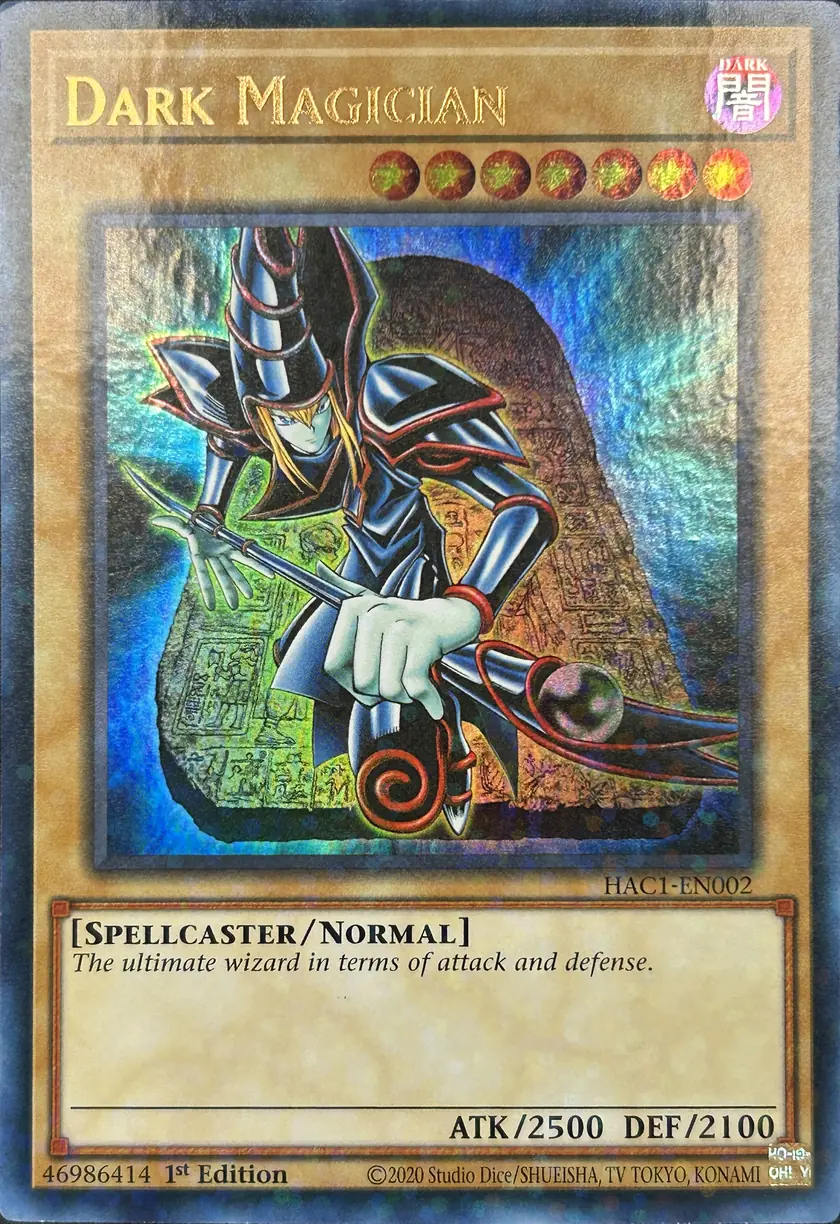
| Legendary Duelists: Season 1 and Season 2 | Ultra Rare | Blue, Green and Purple |
| Legendary Duelists: Season 3 | Ultra Rare | Blue and Red |
| Dragons of Legend: The Complete Series | Ultra Rare | Blue, Green and Purple |
| Battles of Legend: Chapter 1 | Ultra Rare | Silver, beside the standard gold |
A normal Ultra Rare has a gold name, so a blue, green, purple, red or silver name on an Ultra Rare from these sets is a colored version of the same Ultra Rare, not a different rarity. In PowerList TCG the color is the card's print variant, shown beside the set name when you review a match.
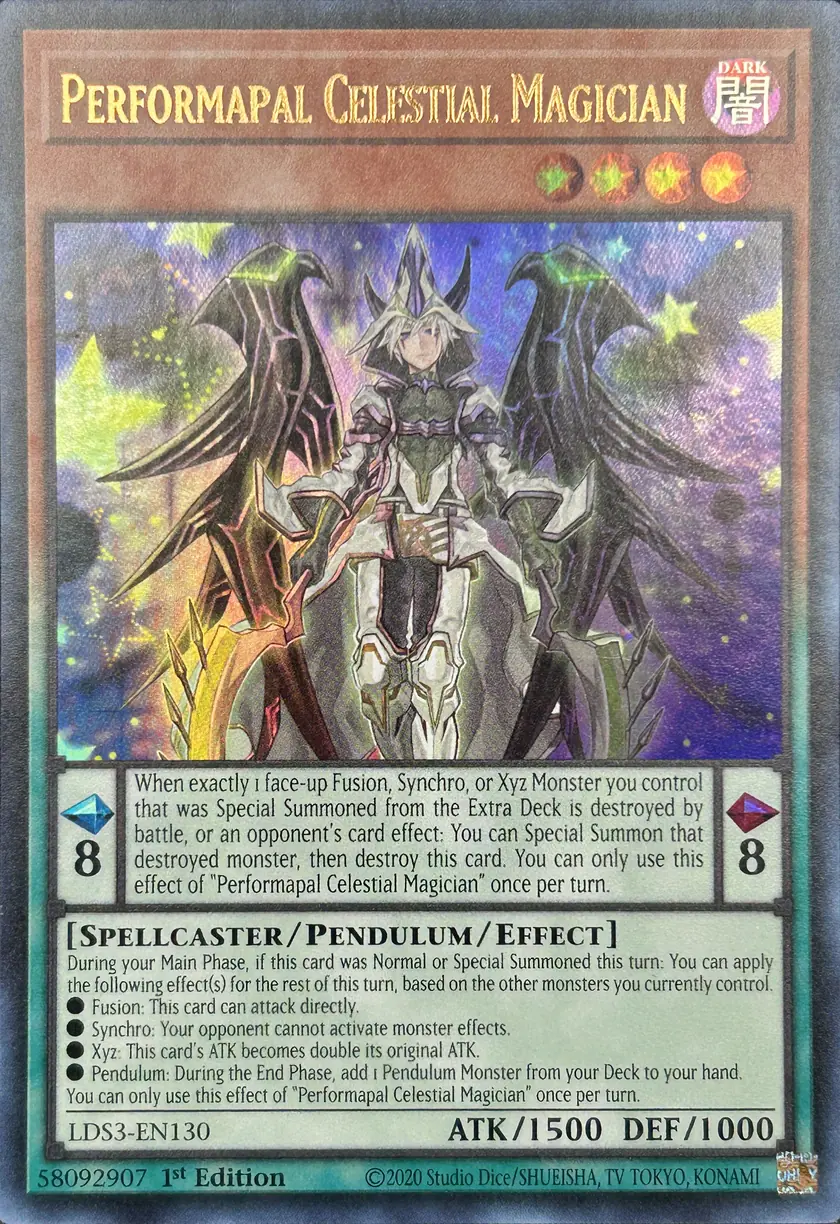
Standard Gold Name
Performapal Celestial Magician, LDS3-EN130.
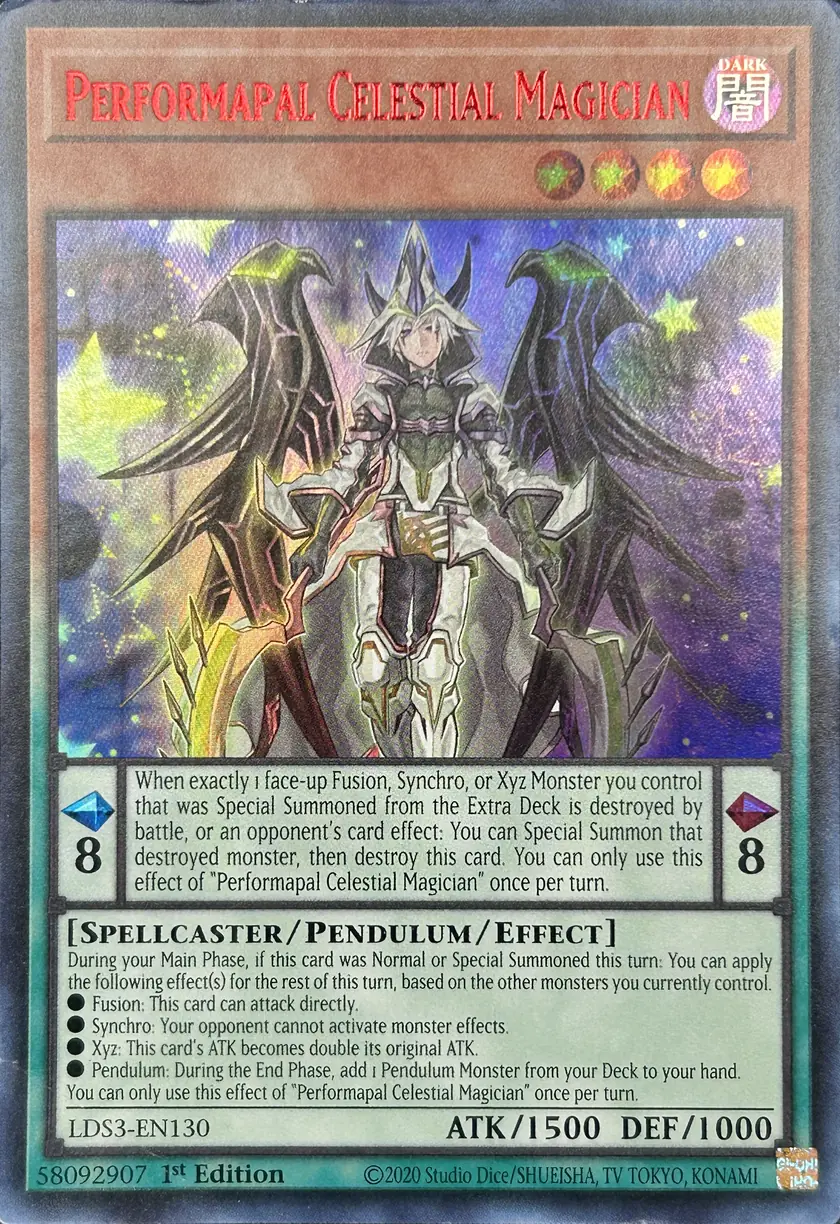
Red Name
The same card and number. Only the name color changed.
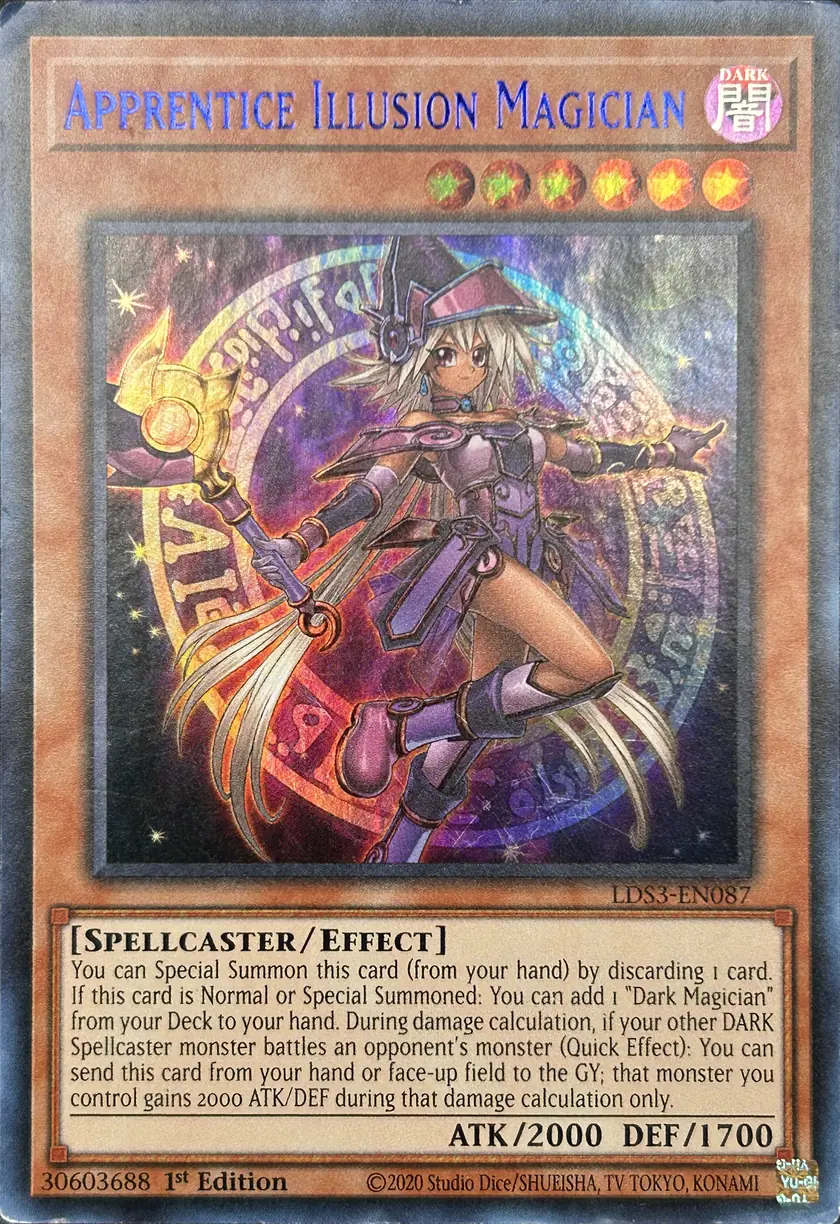
Blue Name
Apprentice Illusion Magician, LDS3-EN087, the other Season 3 color.
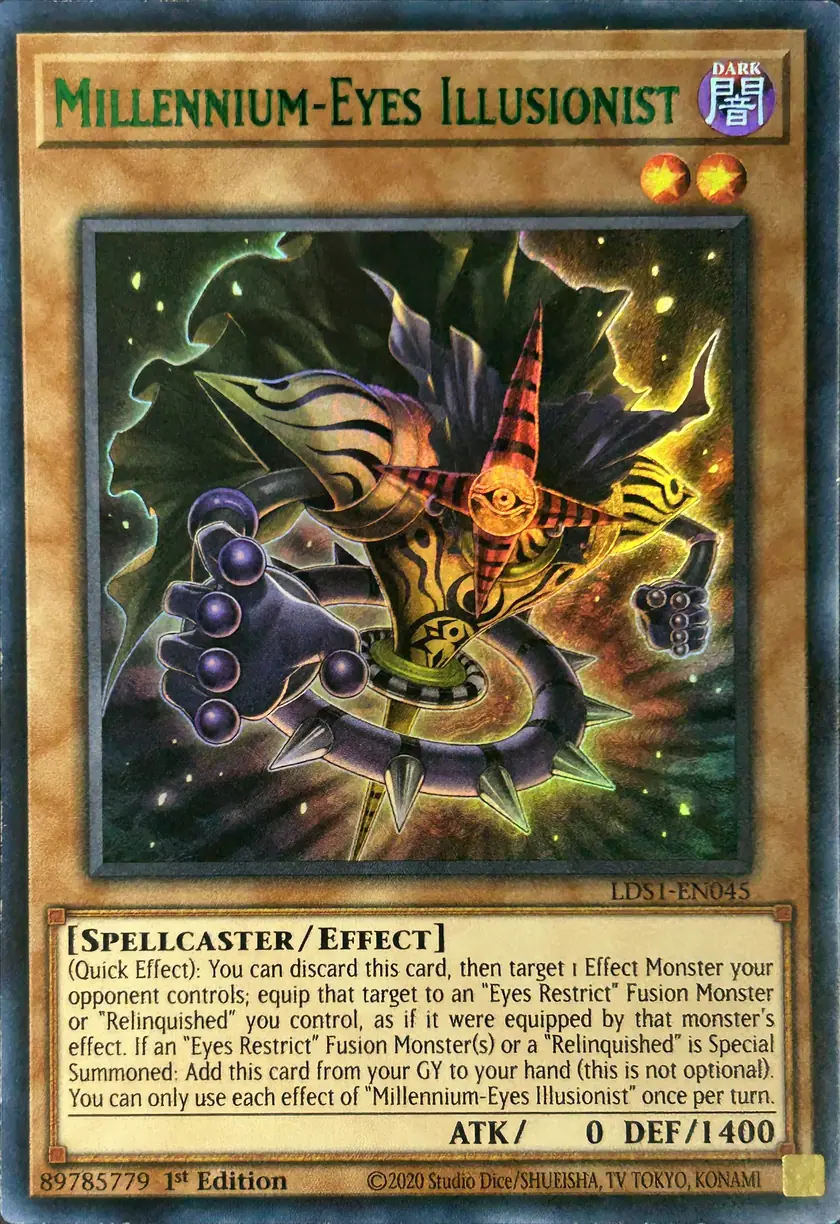
Green Name
Millennium-Eyes Illusionist, LDS1-EN045, from Legendary Duelists: Season 1.
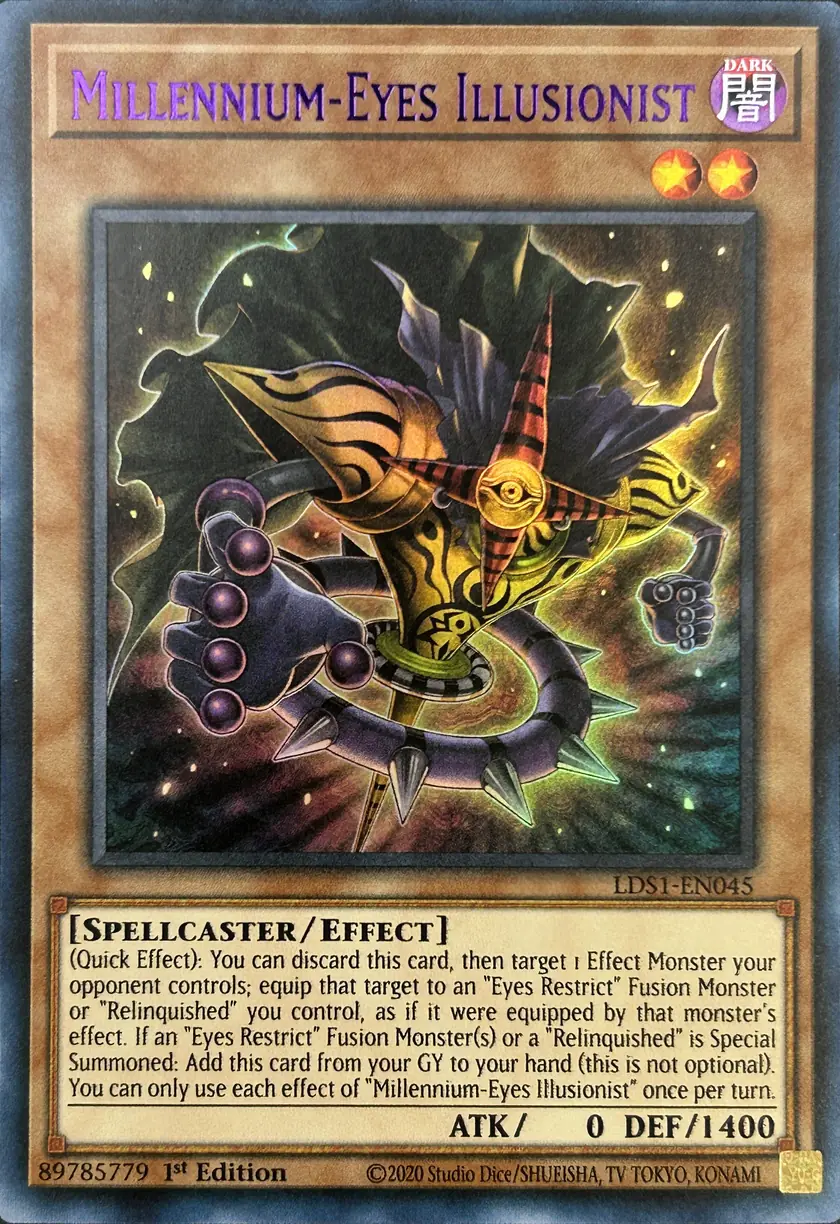
Purple Name
The same card and number with a purple name.
Different Artwork Under One Card Number
Some cards were printed with more than one picture under one card number. The number, the name and the rarity all match, so the art is the tell, and each artwork is its own printing to list. In PowerList TCG the artwork is the card's print variant.
Legendary Decks II prints Blue-Eyes White Dragon in three artworks, all under one number, LDK2-ENK01. Here are all three.
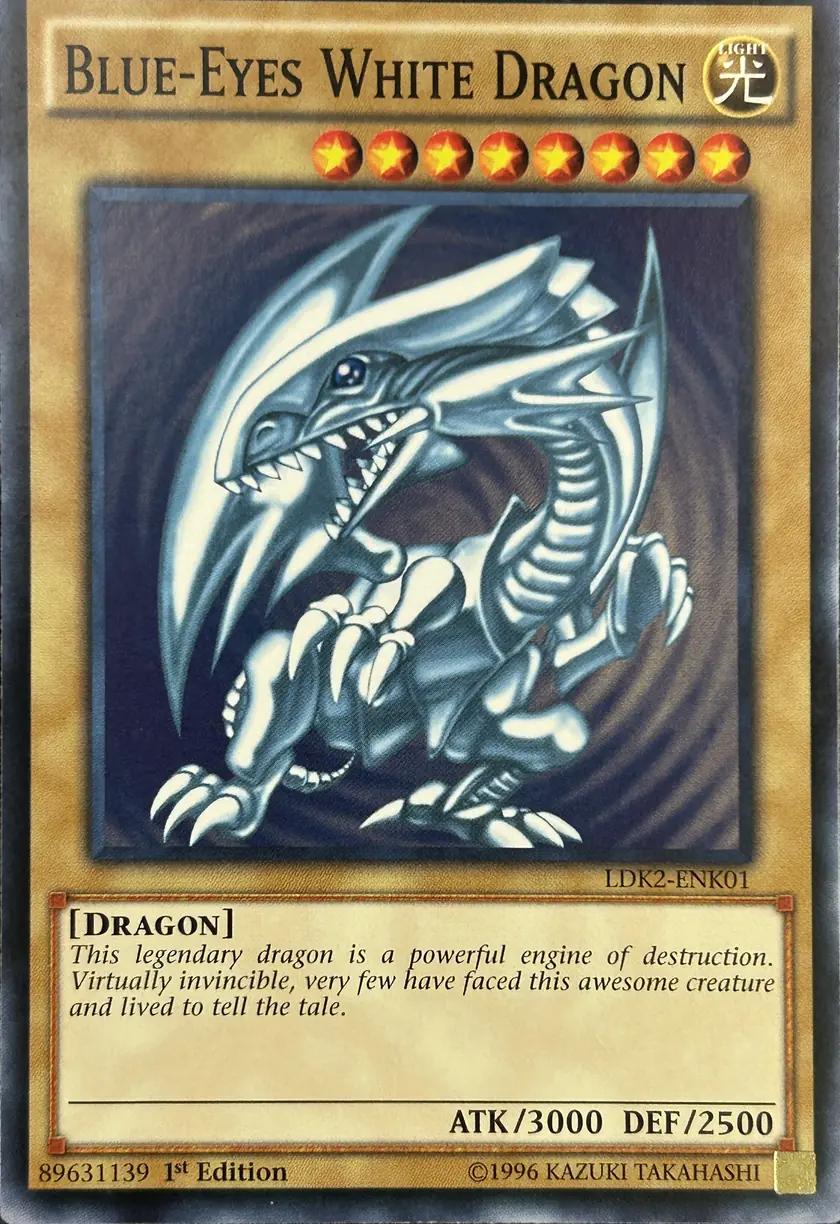
Original Artwork
The artwork from the first Blue-Eyes White Dragon, LOB-001.
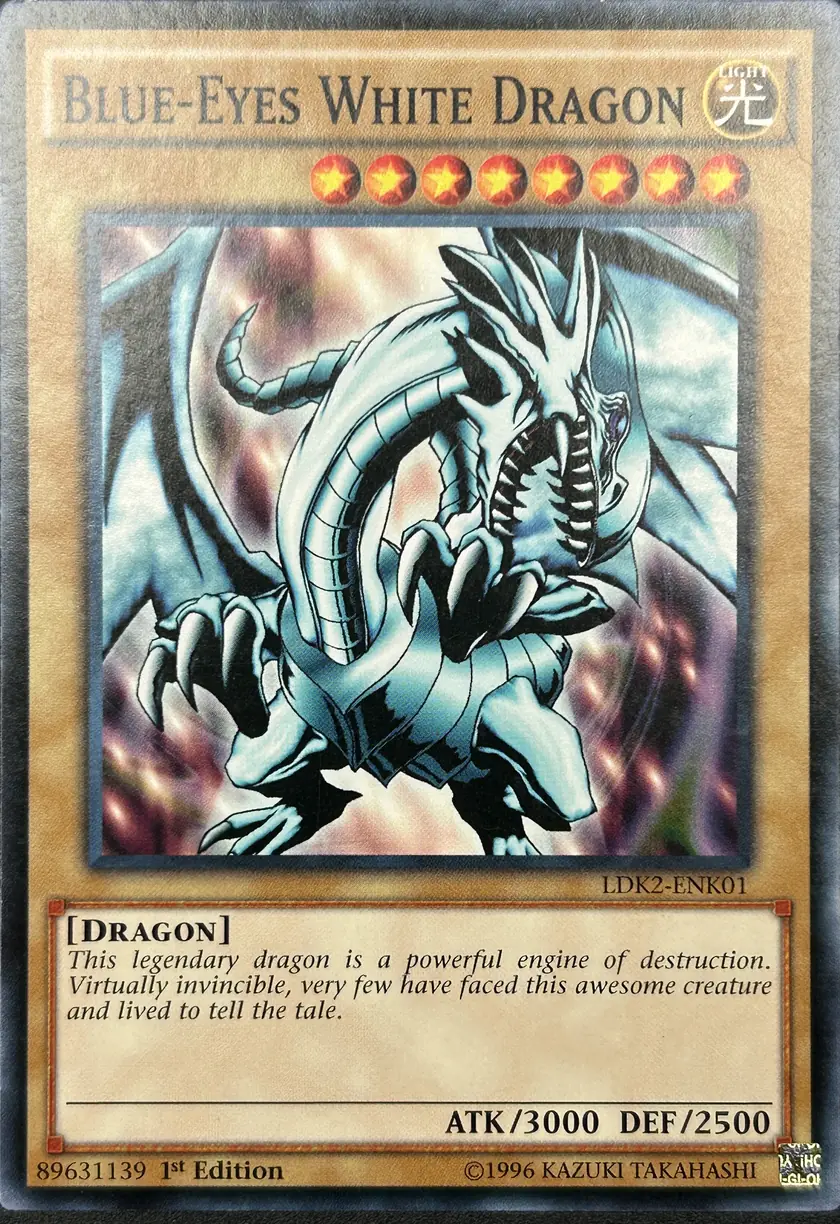
Wings Spread Artwork
The same card number with the dragon facing you, wings open.
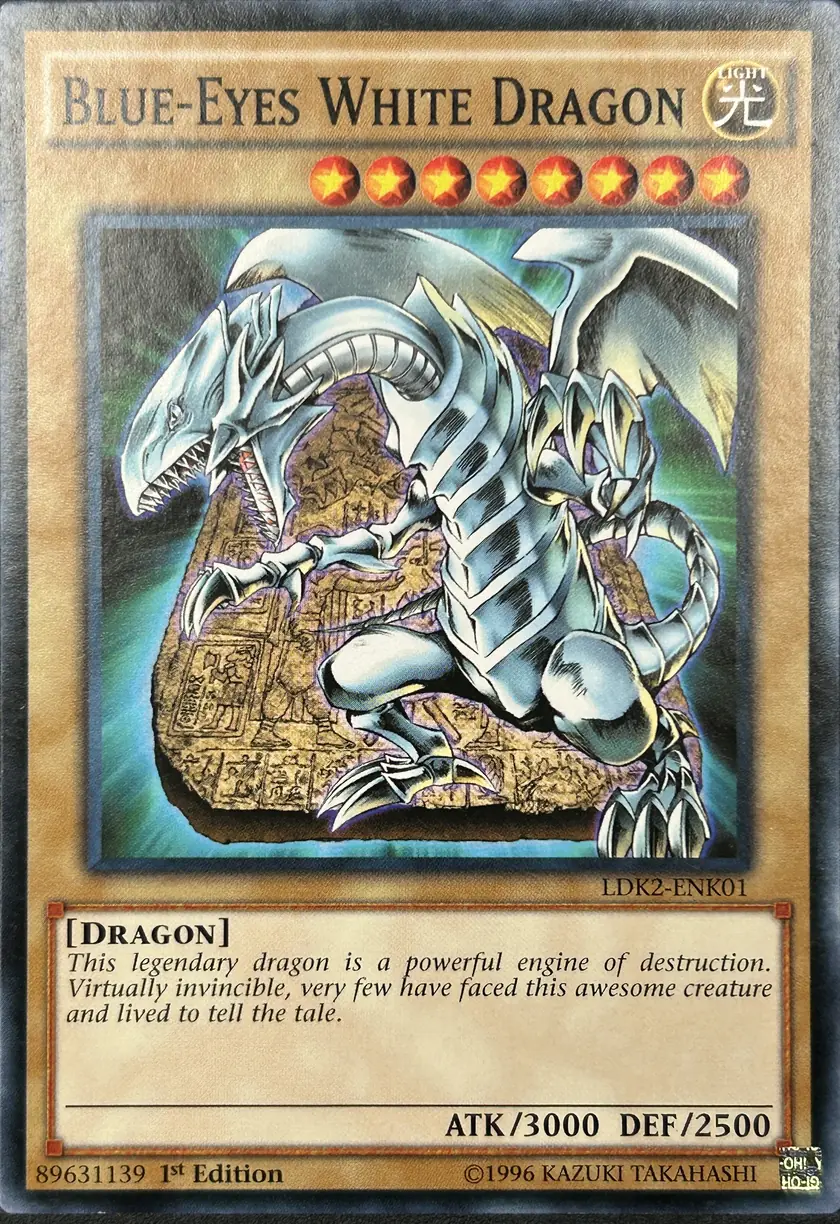
Tablet Artwork
The same number again, with the dragon in front of a carved stone tablet. Each artwork is its own version to list.
The Rarity Collection sets print some cards in their regular artwork and in an alternate one, under the same number and in the same rarities. Here are both artworks of Knightmare Unicorn and Eldlich the Golden Lord.
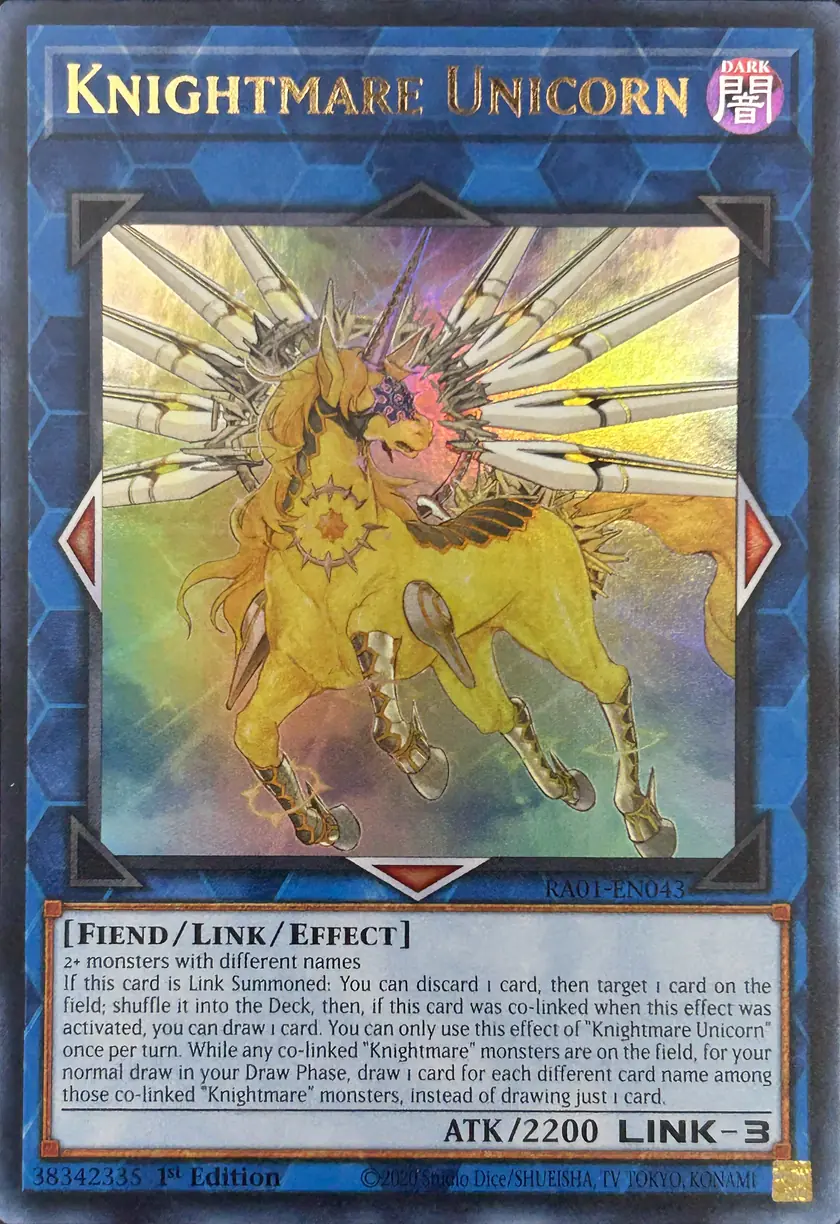
Regular Art, Ultra Rare
The regular artwork: the unicorn on its own.
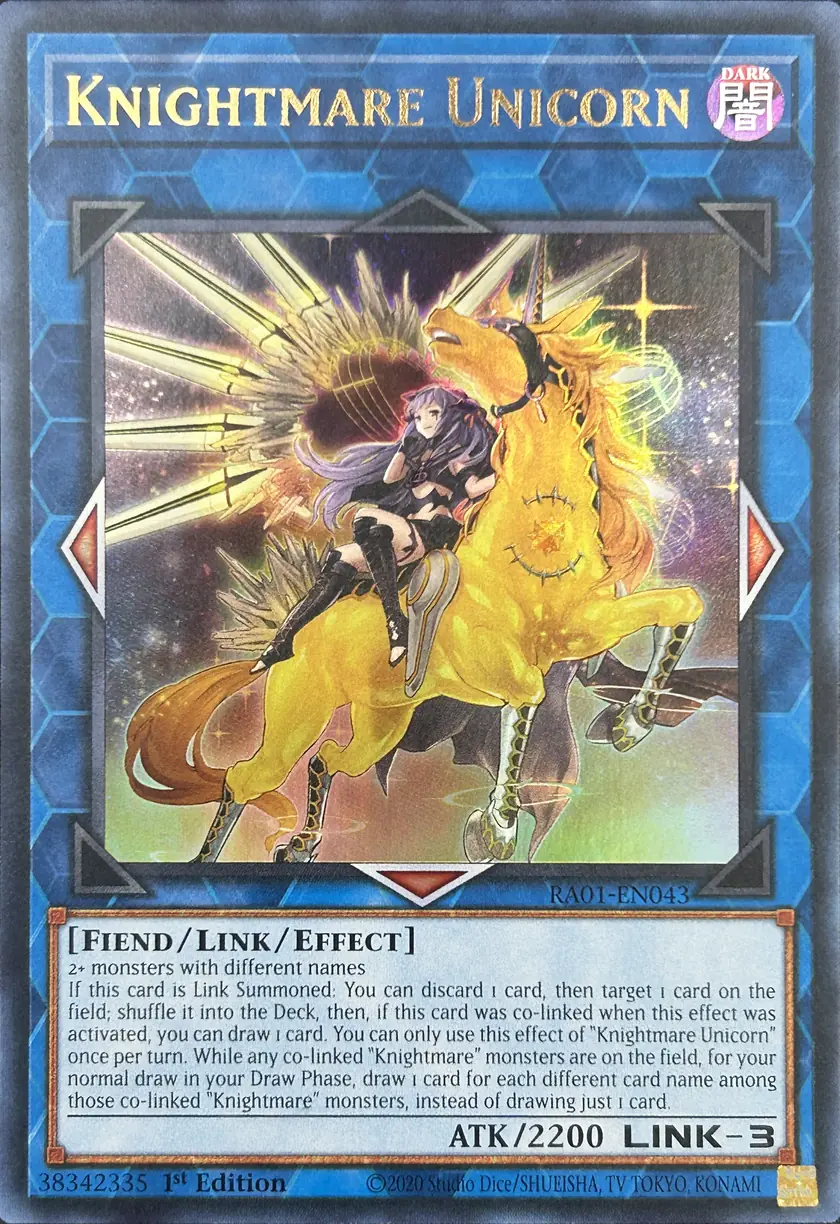
Alternate Art, Ultra Rare
The same number and rarity. The alternate artwork adds a rider.
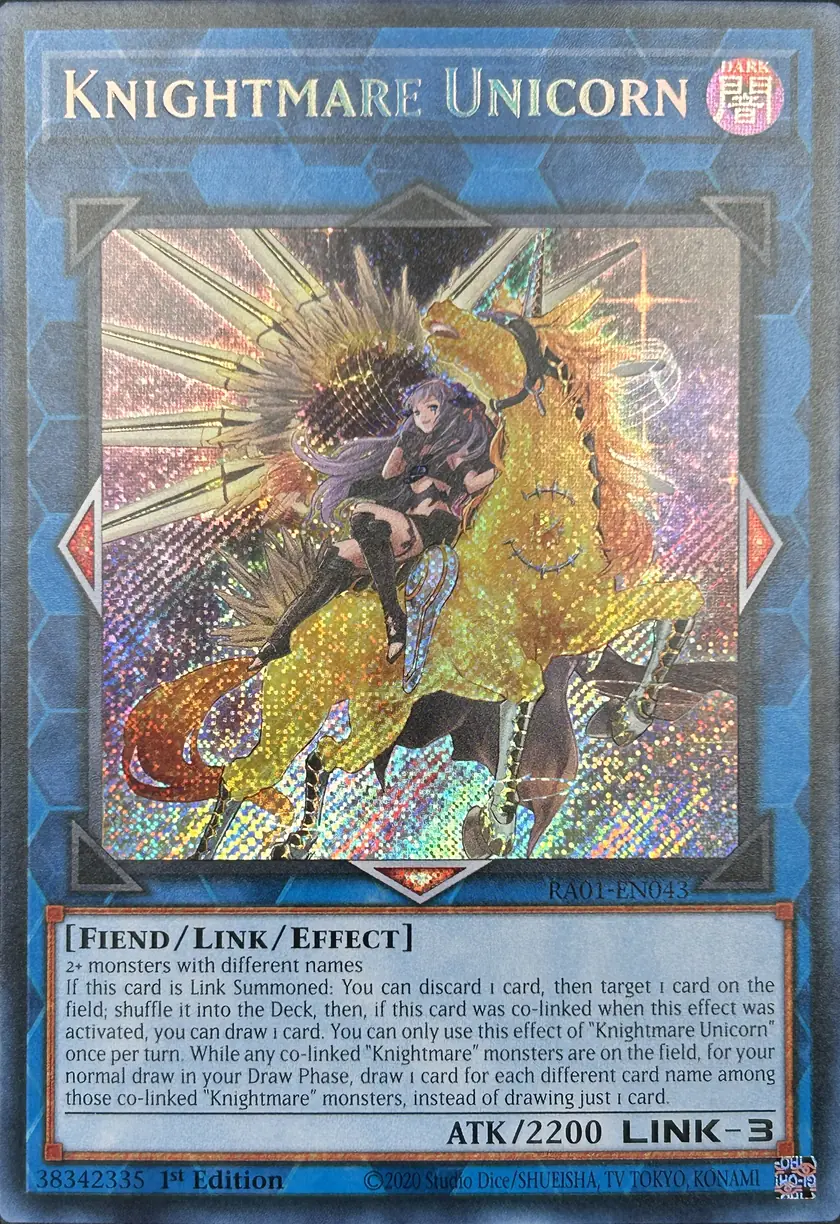
Alternate Art, Secret Rare
The alternate artwork again, here as a Secret Rare.
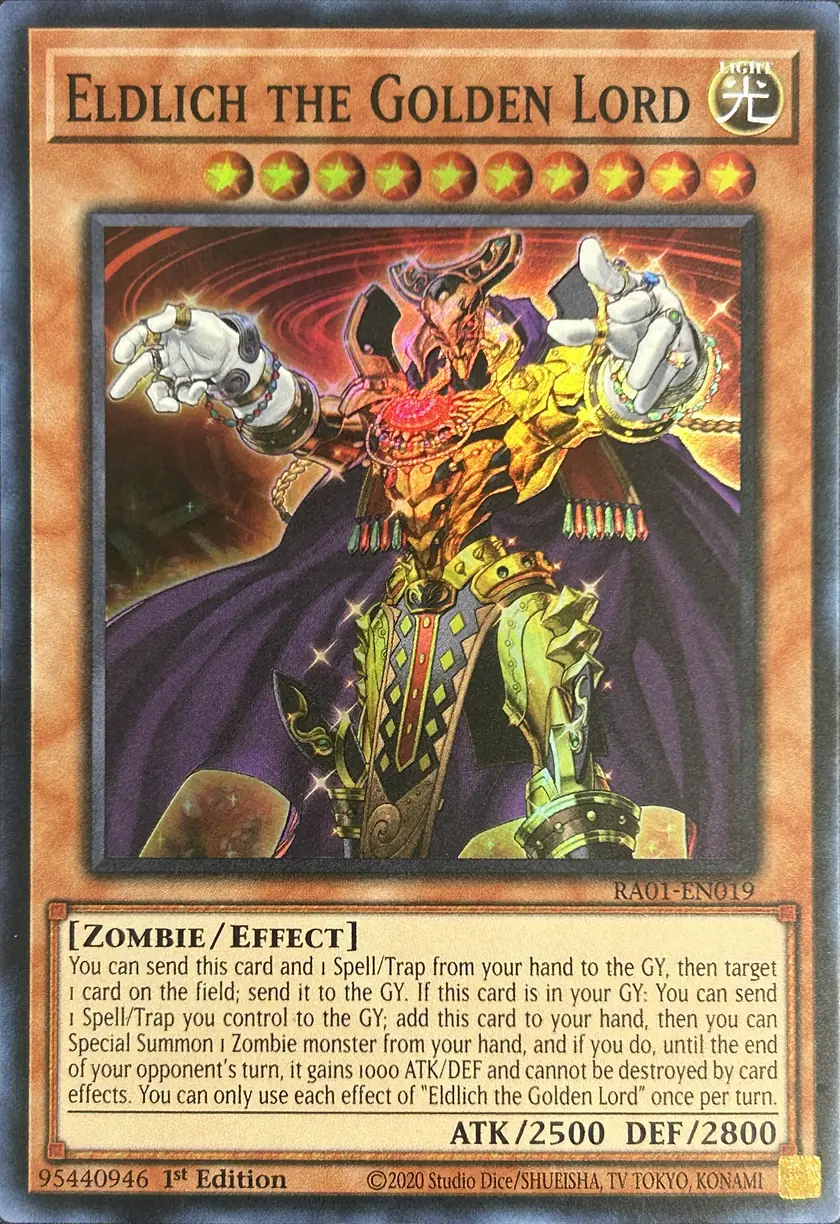
Regular Art, Super Rare
The regular artwork.
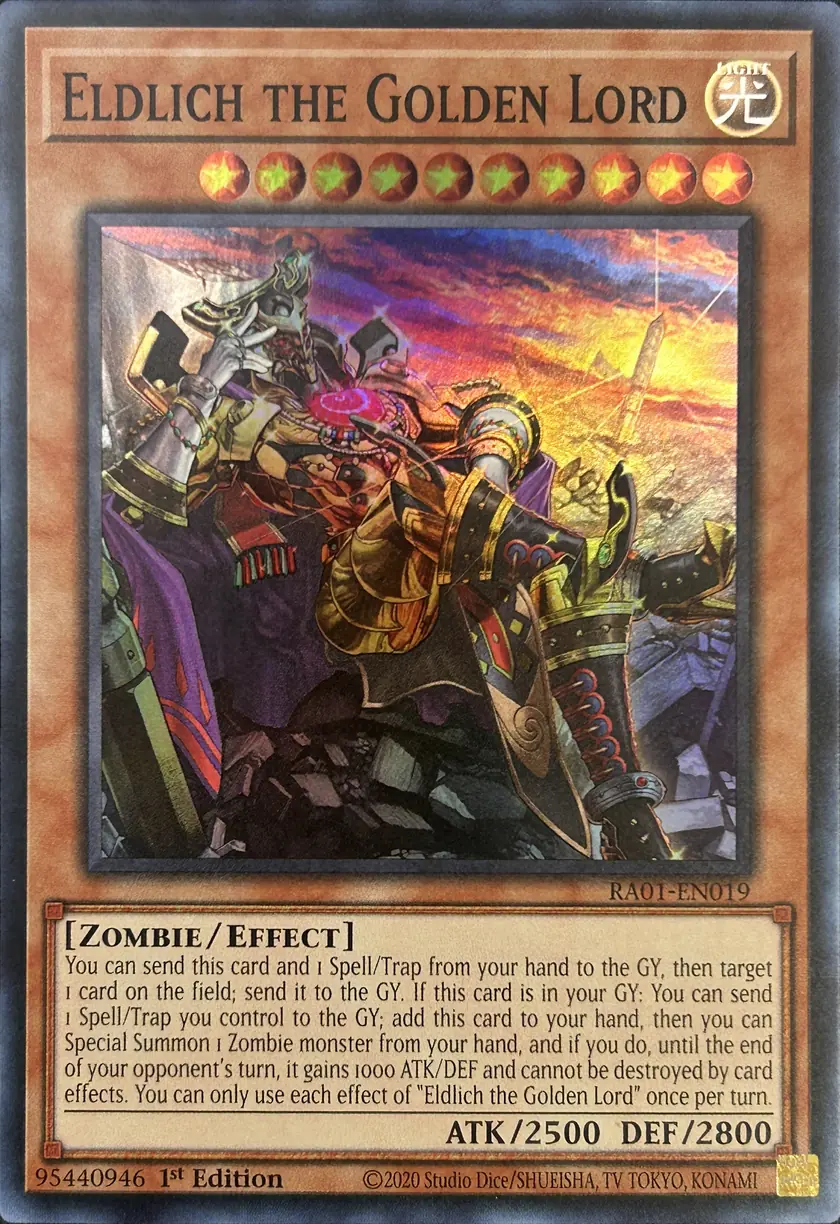
Alternate Art, Super Rare
The same number and rarity with the alternate artwork.
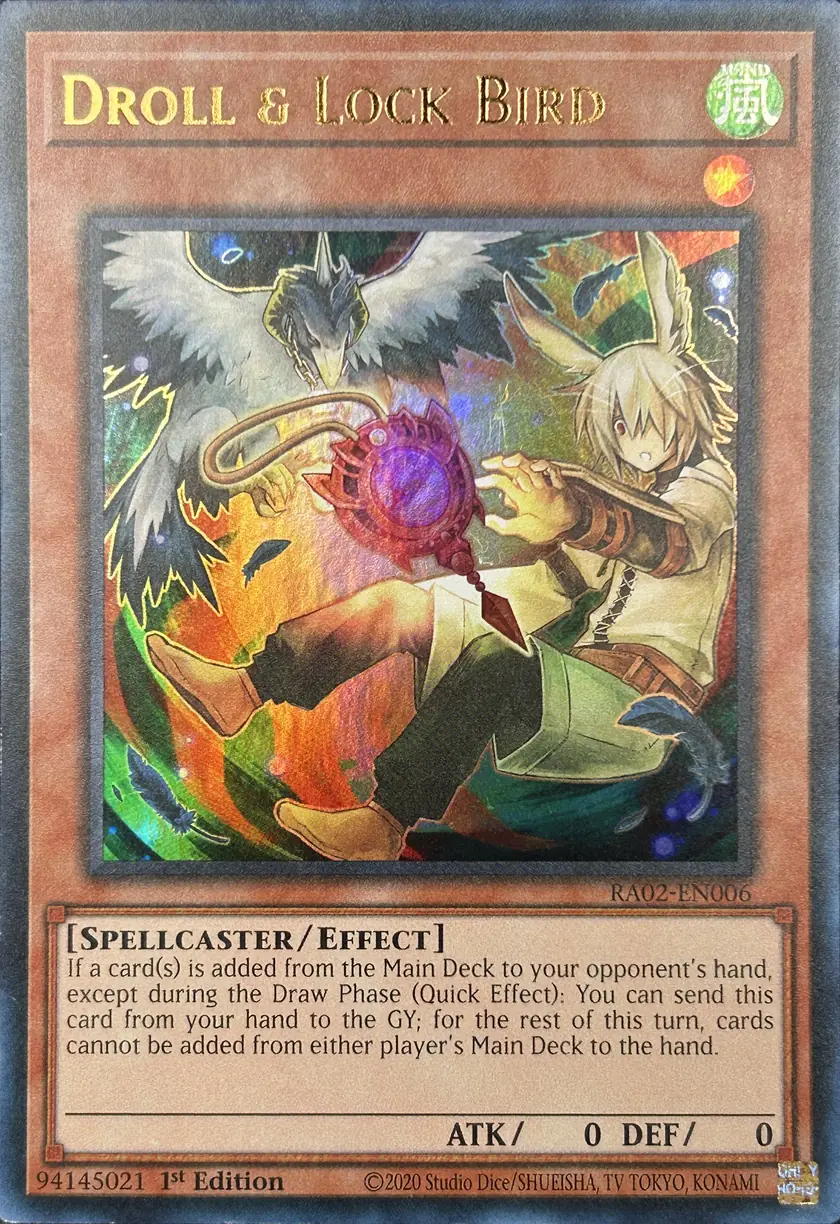
Alternate Art, Ultra Rare
Droll and Lock Bird from the second Rarity Collection, also with an alternate artwork.
How to Spot a Fake Yu-Gi-Oh! Card
A fake can end up in any stack of cards you buy, and a few are good enough to pass a quick look. Every fake in this section was found in bulk collections I bought. I photographed each one front and back, then tore it up. Here's what gave each one away.
Check the Eye of Anubis Hologram
Every real Yu-Gi-Oh! card has a small foil square in the bottom-right corner, the Eye of Anubis hologram. Tilt the card and the square shows rows of the eye and the words "YU-GI-OH!". Cards from Code of the Duelist (2017) on also have tiny stars that only show at certain angles. The square is printed into the card, so you shouldn't be able to feel its edge with a fingertip. It's gold on 1st Edition and Limited Edition cards and silver on Unlimited cards.
 Genuine: silver on an Unlimited card
 Fake: plain glitter
Check the Name, the Number and the Back
A fake often borrows a real card number. The first card below is called Evil Hero Fierce Blade Monster and numbered TAEV-EN003. No card by that name exists, and TAEV-EN003 in Tactical Evolution is Renge, Gatekeeper of Dark World, a Common. The text gives it away too. It reads like a rough translation, with "one sacrifice" and "basic points".
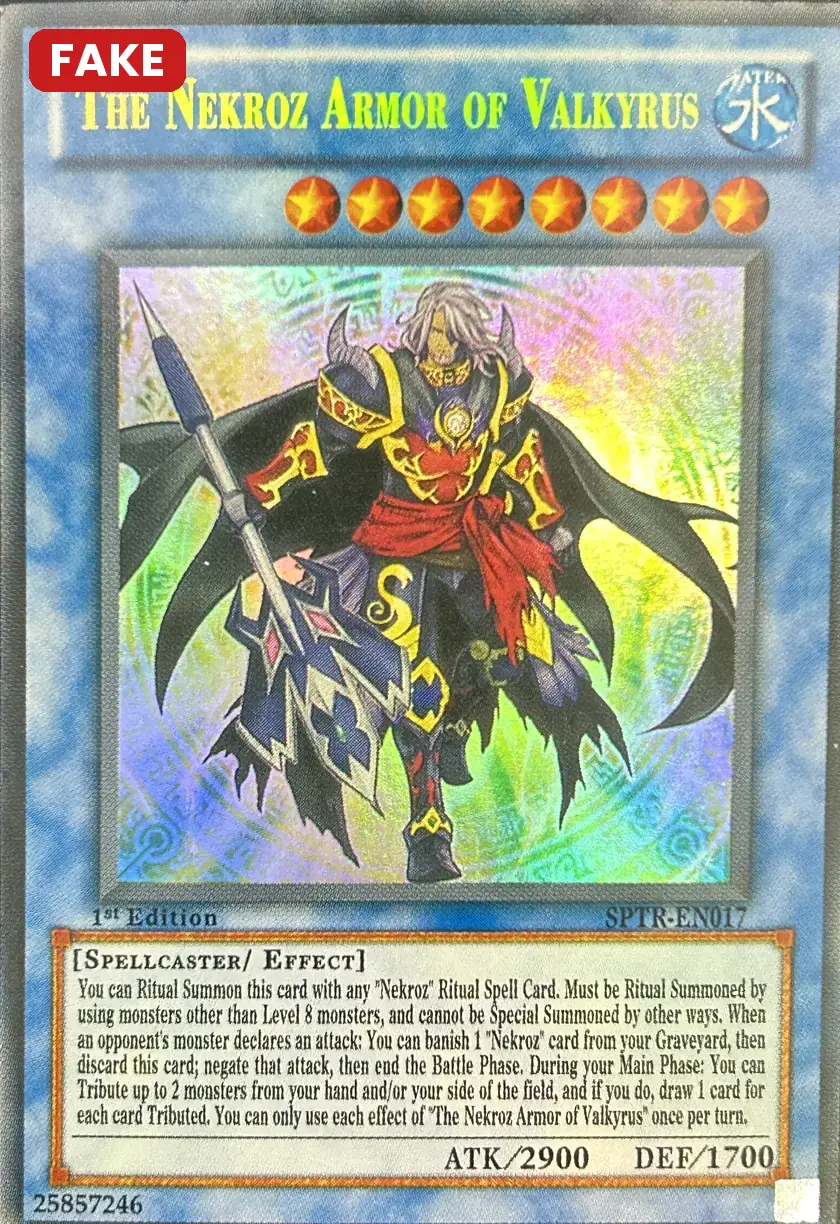
The name has to match word for word. The second fake says "The Nekroz Armor of Valkyrus", but the real card is Nekroz of Valkyrus. Find the set from its code on the Yu-Gi-Oh! Set List, then check the card's name and number against that set's card list.
Then turn the card over. A real back has a sharp brown and orange swirl, KONAMI in white at the top left and the Yu-Gi-Oh! logo at the bottom right. This fake's back is soft and blurry. Hold it next to a back you know is real and the difference shows quickly. A real Yu-Gi-Oh! card won't have a grainy or sandy back. It should feel smooth, with no texture.
Some fakes leave things off altogether. The fake Backfire further down has no KONAMI at the top left of its back, and the Yu-Gi-Oh! logo at the bottom right is washed out and missing its ™ mark. On the front, check the bottom line. A real card prints a copyright line at the bottom right, such as ©1996 KAZUKI TAKAHASHI, and most of my fakes have nothing there at all. One fake Enchanted Javelin even spells it ©1996 KAZUKI TARAHASEI.
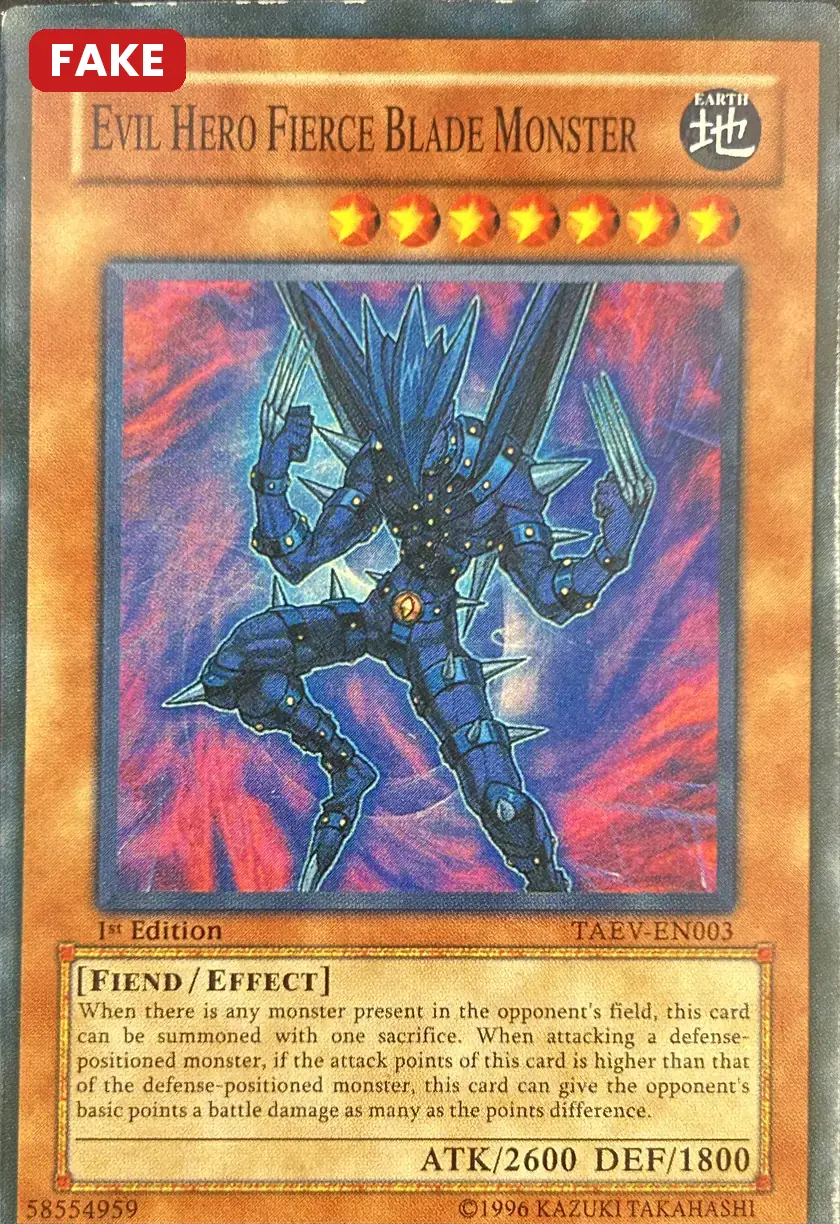
Wrong Card for the Number
TAEV-EN003 is really Renge, Gatekeeper of Dark World.
Card Text Styling
Look at the card name and the card text. The name is thicker and isn't the same font as a real Yu-Gi-Oh! card.
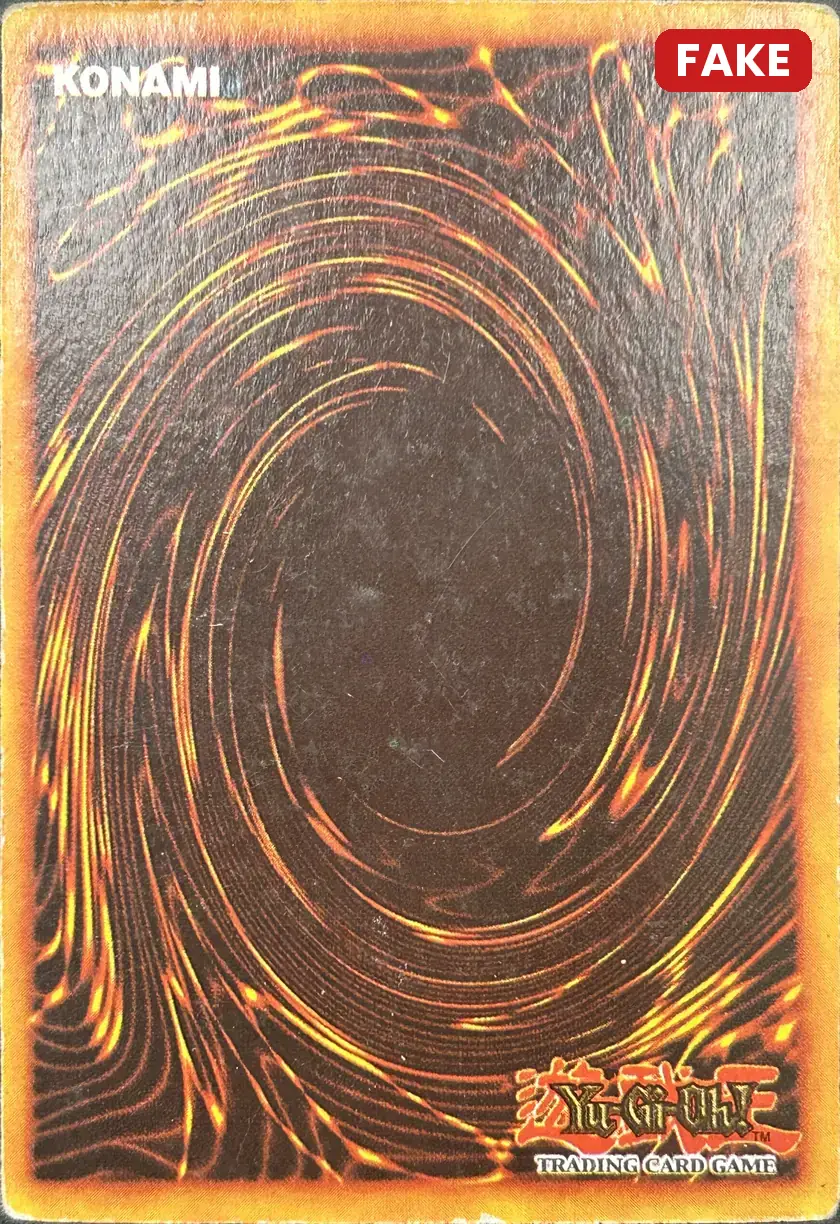
A Blurry Back
Soft swirl, smudged print. Press Real to compare it with a genuine back.
What's Inside a Torn Fake
Only tear a card you already know is fake. Torn open, mine showed how they were made: a printed plastic sheet, a foil front peeling off plain white card, and plain white paper the whole way through. Use the buttons to see each card's front, back and what's inside.
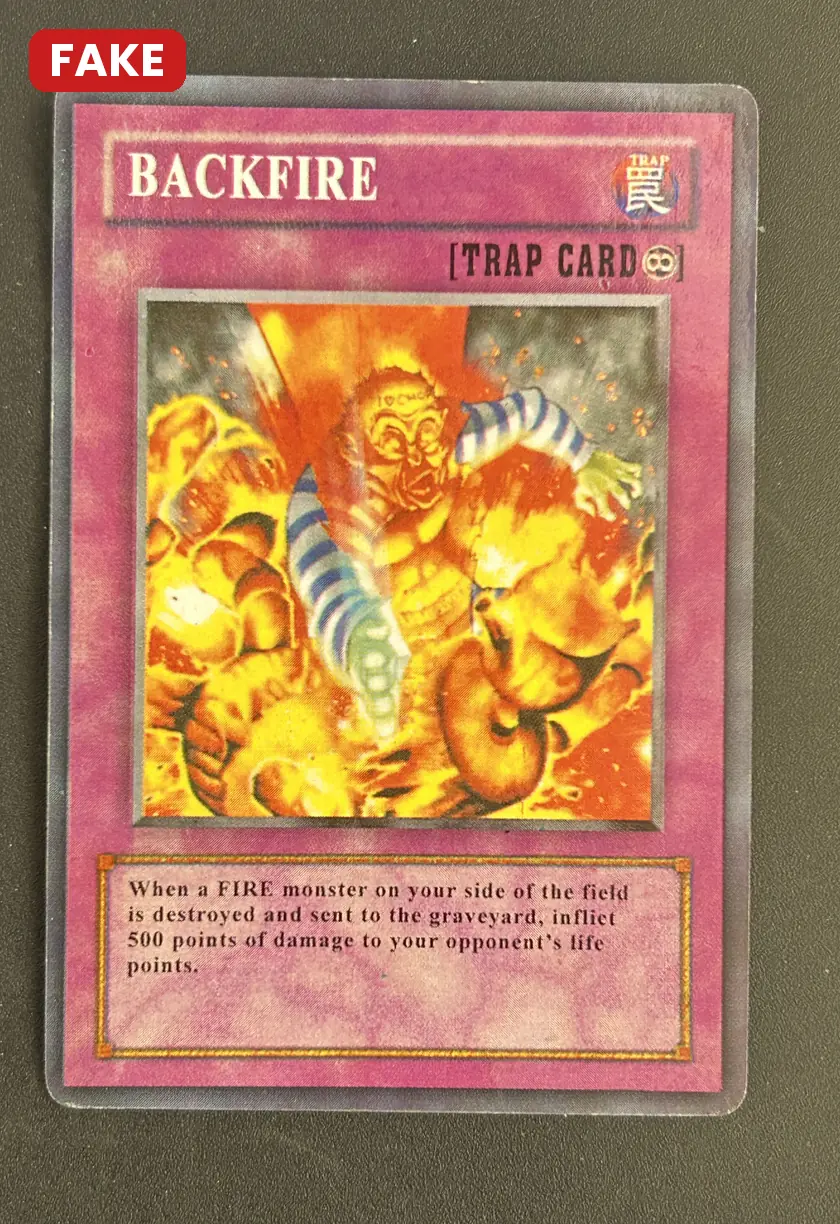
Printed Plastic
This Backfire is a plastic sheet. Where it tore, the picture comes away clear.
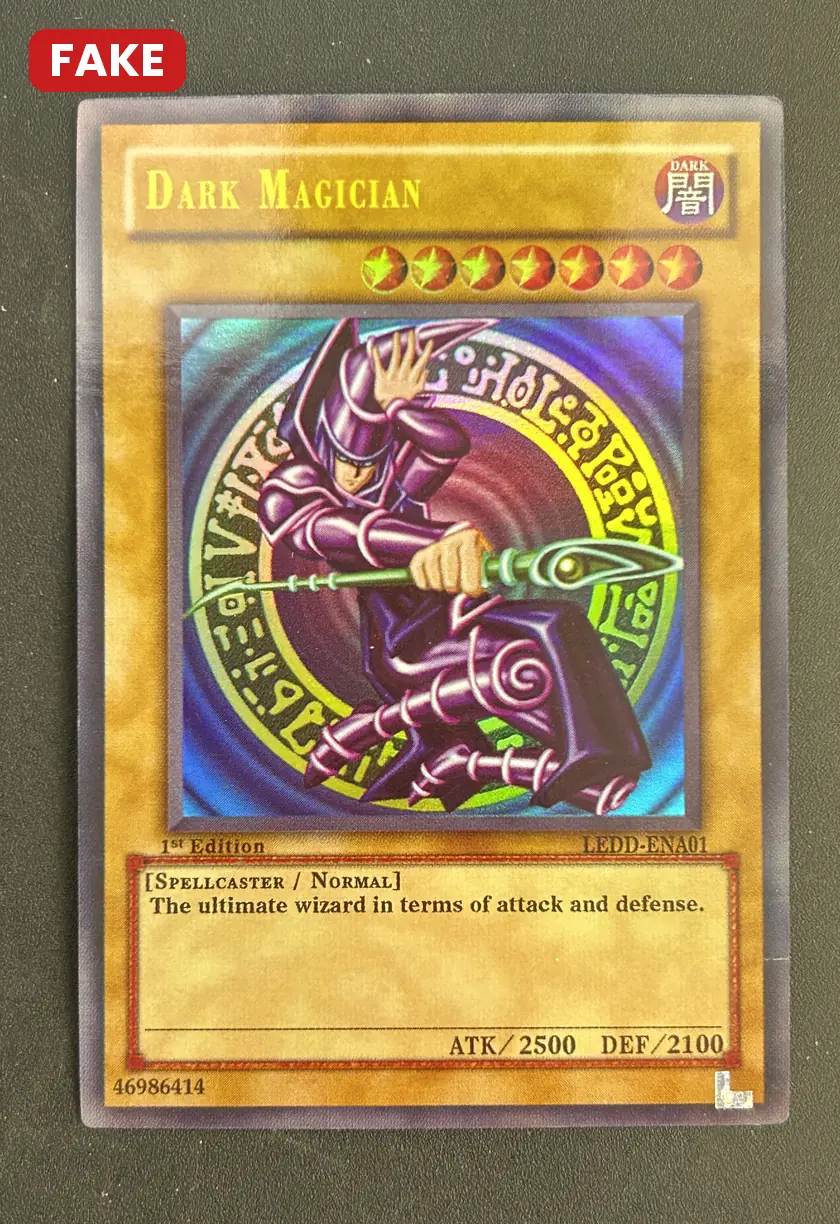
Foil on White Card
The foil front of this Dark Magician peels off a plain white card.
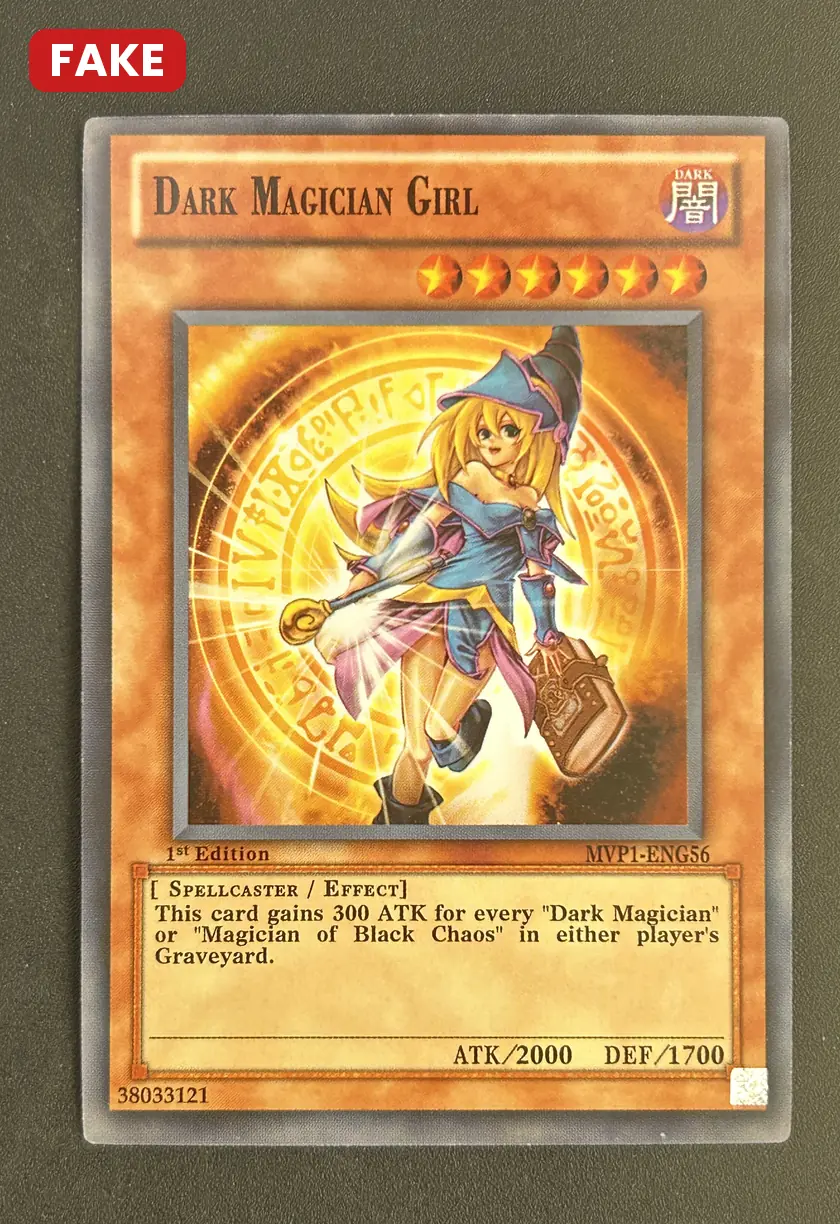
White Paper
Torn across the middle, this Dark Magician Girl is white paper all the way through.
Common Mix-Ups That Cost Sellers Money
Quick Checklist
Run through these four every time you sort a stack.
- Read the card number for the set code, the language code and the number. The Yu-Gi-Oh! Set List has every set code.
- Look for "1st Edition" or "LIMITED EDITION" in both spots. If it's not there, it's Unlimited.
- If the card number exists in an original and a reprint, check the copyright year.
- Tilt the card and look at the foil pattern. Is the art smooth, grainy or embossed?
Identify Cards Faster with PowerList TCG
After reading this guide you should have a good understanding of how to identify Yu-Gi-Oh! cards and feel confident in knowing the exact printing you own. That knowledge pays off when you scan a batch into PowerList TCG. Each card comes back matched to a catalog printing with its card number, finish and rarity, so you can quickly look over each match and confirm the printing is right. On the off chance PowerList TCG picks the wrong printing, the five closest alternatives sit right below it for you to choose from.


When I upload my own Yu-Gi-Oh! cards, I check the exact same spots this guide covers: the number, the edition, the foil and the copyright line on the sets that were reprinted. That's how the wrong printing gets caught before it ever reaches a listing. Knowing a bit about the game you're uploading before you start matching makes listing a lot faster. It's how I scan, upload, confirm and list 1,500 to 2,000 Yu-Gi-Oh! cards an hour to eBay and Shopify with PowerList TCG. Once they're listed, the free eBay Fee Calculator shows what you keep from each sale.
